Can ultrapure water polishing resin be regenerated?
Except for some special resins that cannot be regenerated, ultrapure water polishing resins are generally able to be regenerated, but the regeneration of ultrapure water polishing resins is a little more difficult than that of other resins, and the detailed steps of ultrapure water polishing resins can be divided into layering, regeneration, cleaning, mixing, and positive washing.
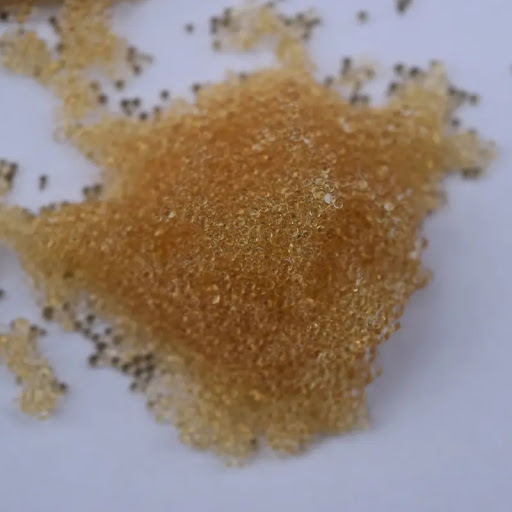
What does ultrapure water polishing resin consist of?
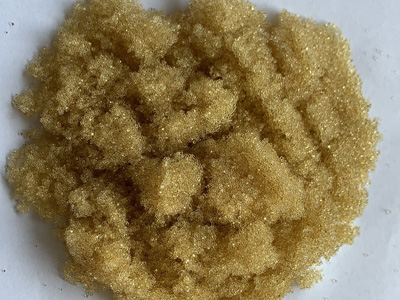
In understanding the ultrapure water resin can be regenerated before we first understand the ultrapure water resin is composed of what, ultrapure water polishing resin is generally made of two kinds of resin mixed, anion and cation exchange resin will be mixed in accordance with a certain ratio, generally the ratio is 1:2 or 1:1, the two kinds of resin a kind of cation exchange resin, and the other is anion exchange resin, cation exchange resin will adsorb the cations in the water, and the cations will be adsorbed in the water, the cation exchange resin will be adsorbed in the water. The cation exchange resin will adsorb the cations in the water, and the anion exchange resin can adsorb the anions, so that the produced water reaches the standard of ultrapure water, generally the resistivity of ultrapure water resin can reach more than 18 megohms.
Regeneration method of ultrapure water polishing resin:
1. layering:
First open the backwash valve and backwash discharge valve, backwash flow rate can not be too fast, generally about 10m/h, until the negative and positive resin layering is obvious, backwash should be slowly closed at the end of the backwash valve, so that the resin particles gradually settle to achieve the best layering effect. If the layering effect is not obvious, it can be layered several times.
2. Regeneration:
The negative resin can be regenerated using 5% lye (NaOH), the cleaning time is about 40 minutes, the flow rate should be maintained at 6m/h, the waste liquid will be discharged from the middle drain, in order to prevent the lye from entering the positive resin, you can enter a small amount of water from the bottom and regeneration of lye together with the discharge from the middle drain.
For the yang resin, the acid (HCL) with a concentration of 4% will be used for cleaning for about 30 minutes. In order to prevent the acid from entering the negative resin and to carry out a small flow of cleaning for the negative resin, therefore, a certain amount of clear flow of washing water will be entered from the inlet pipe and discharged from the middle drain together with the regeneration acid.
3. Cleaning:
Continue to flow rate of 6m / h for replacement cleaning, waste liquid in the discharge pipe discharge, the negative resin until the discharge of water OH-alkalinity less than 0.5 [H +] mmol / l, until the discharge of water acidity is less than 0.5 [H +] mmol / l, until the cation resin.
4. Mixing:
Put the water of the resin tank to about 10-500px on the resin layer, and then mix, mixing time is about 10 minutes, the pressure is 1-1.5kg/cm².
5. Positive washing:
Use water to clean the resin from top to bottom, when the water is full of equipment, open the lower discharge valve, close the exhaust valve, positive washing flow rate with the water production flow rate, when the water resistivity is greater than the water requirements, can be used normally.

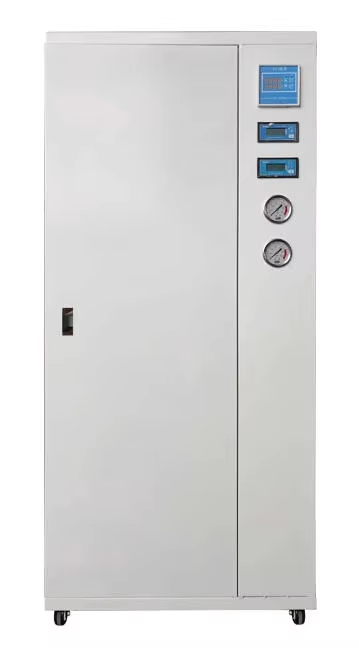 Analysis of the Structure and Working Principle of Ultrapure Water Equipment
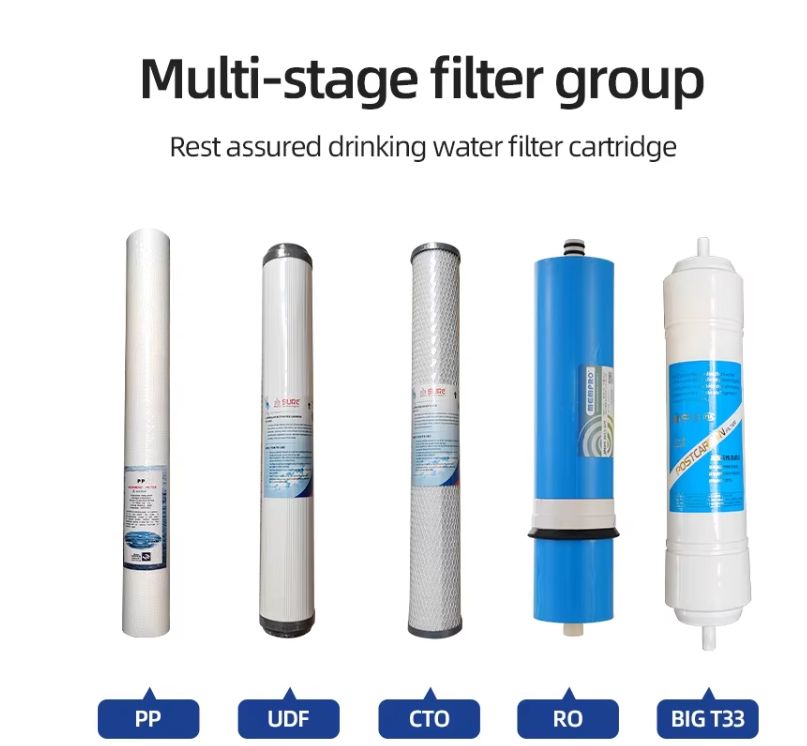 Tips for Using Home Water Purifier Filter Cartridges
 The Battle of Four Membranes: Microfiltration, Ultrafiltration, Nanofiltration, Reverse Osmosis—Which Reigns Supreme in Water Purification?
 Don't Pay for Stupidity! The Ultimate 2026 Water Purifier Guide: Selection, Pitfalls, and Maintenance All in One Article