Water purification information

What impurities can the water purifier filter?

Views : 133017
Update time : 2021-12-27 14:41:27
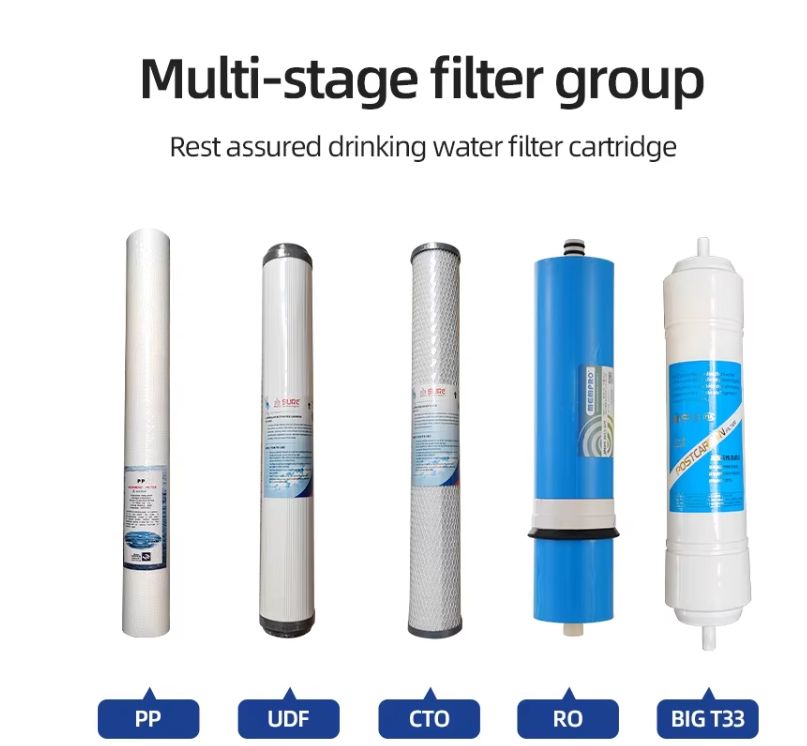
They are all water purifiers. Why some can only filter sediment, while others can filter out drinking water? It depends on the filter element it uses. Most common water purifiers on the market use four to six-stage filter element combinations. On the one hand, the water purification effect is improved, and on the other hand, the division of labor and cooperation of different filter elements can extend the life of the filter element.

Primary filtration: filter rust, silt, suspended solids and other large particles of impurities for coarse filtration.

Secondary filtration: granular activated carbon filter element, decolorizing and deodorizing, can filter pesticides, residual chlorine and other organic pollutants to a certain extent.

Three-stage filtration: generally sintered activated carbon, and some manufacturers use PP cotton to deeply absorb different colors, odors, and residual chlorine in the water, and protect the main filter element of the water purifier.


Four-stage filtration-one main filter element: The main stage of purification effect also determines the "upper limit" of the water purifier's purification capacity. There are common types: ultrafiltration membranes and RO reverse osmosis membranes.

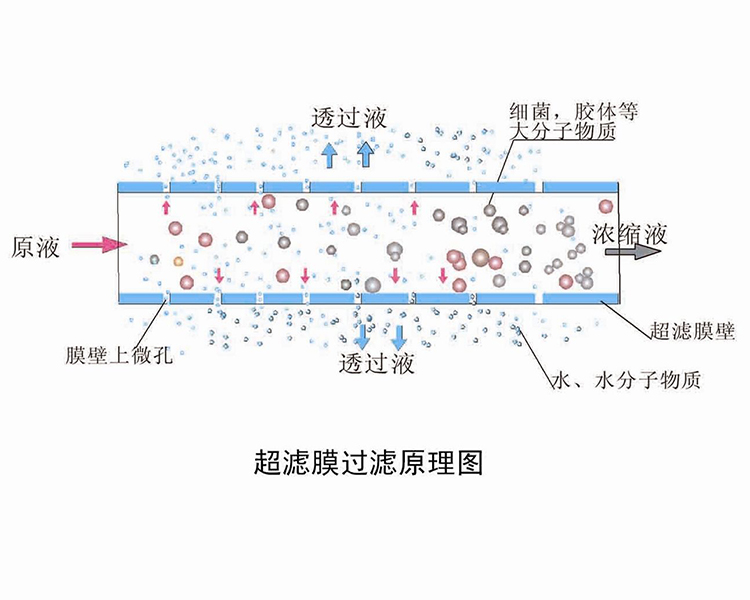
1) Ultrafiltration membrane: The filtration accuracy is 0.01 microns, which effectively intercepts impurities such as sediment, bacteria, and macromolecular organics in the water, but it has a poor filtering effect on small organic molecules and is relatively cheap.
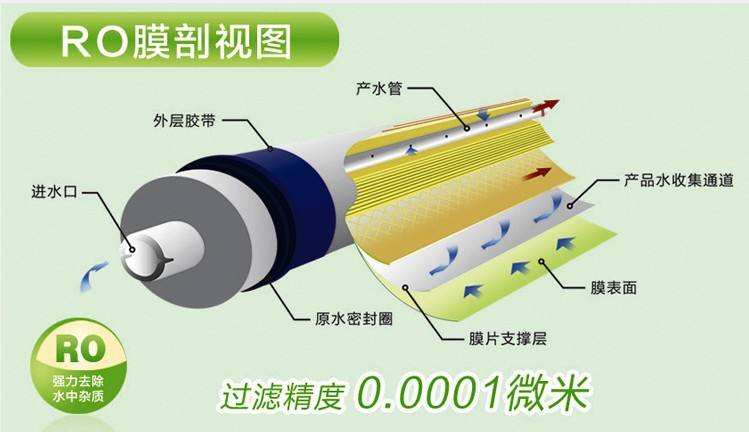
2) RO reverse osmosis membrane technology: currently the world’s advanced filtration technology, with a pore size of only 0.0001 microns, which can completely remove bacteria, viruses, residual chlorine, pesticides, inorganic salts, heavy metals and other impurities in the water. The purified water is pure water , Can be consumed directly.
Five-stage filtration: The activated carbon filter element is placed at the rear to further absorb the different colors and odors in the water to improve the taste.

The life of the filter element is limited, and timely replacement of the filter element is a prerequisite to ensure the normal operation of the water purifier.
Related News
Read More >>
A Comprehensive Guide to Pure Water Production Core Processes: Understanding the Role of Each Stage from Coarse Filtration to EDI A Comprehensive Guide to Pure Water Production Core Processes: Understanding the Role of Each Stage from Coarse Filtration to EDI
Jan .09.2026
Understanding the working principles of each fundamental unit is the cornerstone for proper equipment selection, efficient operation, and effective troubleshooting.
Nine Core Water Treatment Technologies: How Your Pure Water Is Made Nine Core Water Treatment Technologies: How Your Pure Water Is Made
Jan .09.2026
In modern water treatment systems, nine core technologies each play their part, functioning like a precision assembly line to transform ordinary raw water into purified water that meets diverse needs.
What are the differences between common types of water used in laboratories? What are the differences between common types of water used in laboratories?
Jan .08.2026
What are the differences between common types of water used in laboratories? (Ultrapure water, deionized water, RO water, distilled water, double-distilled water)
How to Choose Laboratory Water? Deionized Water, Double-Distilled Water, or Ultrapure Water? How to Choose Laboratory Water? Deionized Water, Double-Distilled Water, or Ultrapure Water?
Jan .08.2026
The core distinctions between different types of laboratory water (such as ultrapure water, deionized water, RO water, etc.) ,which directly impact their suitability for various experiments.