Comprehensive Glossary of Common Water Treatment Terminology
Ever feel overwhelmed by technical jargon during water treatment project coordination, client communication, or industry learning? No worries! Today we've compiled an ultra-practical glossary of essential water treatment terms, breaking down core concepts in plain language. Whether for marketing coordination or foundational learning, these definitions are ready to use.
【I. Pretreatment: The “First Line of Defense” in Water Treatment】
Pretreatment focuses on removing large particulate impurities from raw water to protect downstream core equipment—acting as the “pre-screening filter” for water treatment systems.
1. Multi-Media Filter
Loaded with filter media like quartz sand and anthracite, it specifically intercepts large impurities such as silt, rust, and suspended solids, reducing water turbidity.
2. Activated Carbon Filter
Leverages activated carbon's strong adsorption properties to remove residual chlorine, odors, color, and some organic compounds, preventing chlorine corrosion of downstream membrane modules or resins.
3. Water Softener
Contains cation exchange resin, primarily removing calcium and magnesium ions (the “culprits behind scale”) to reduce water hardness and prevent pipe/equipment scaling and blockages.
4. Security Filter
Also known as a precision filter, its cartridge pores measure just 1-5μm. It intercepts minute particles remaining after pretreatment, acting as a “protective net” for core equipment like reverse osmosis membranes.
【II. Membrane Separation Technology: Core Process for Pure/Ultrapure Water】
Membrane separation relies on specialized semi-permeable membranes to “sift” out impurities, serving as the key to producing pure and ultrapure water. It encompasses four core technologies categorized by pore size:
1. Microfiltration (MF)
Membrane pore size: 0.1-10μm. Functions like a “coarse sieve,” primarily removing bacteria, suspended solids, and colloids. Commonly used for drinking water sterilization and industrial water pretreatment.
2. Ultrafiltration (UF)
Membrane pore size: 0.001-0.1μm. Retains macromolecular organics, bacteria, and viruses while preserving minerals. Produced water serves as feed for reverse osmosis or high-quality reclaimed water reuse.
3. Nanofiltration (NF)
With pore sizes between ultrafiltration and reverse osmosis, it exhibits high retention rates for divalent ions like calcium and magnesium but low retention for monovalent ions. Suitable for water softening, color removal, and organic matter reduction.
4. Reverse Osmosis (RO)
With a membrane pore size of just 0.0001μm (ultra-precise!), it retains nearly all ions, organic matter, bacteria, and viruses. The produced water is commonly referred to as “pure water” and is widely used in electronics, pharmaceuticals, drinking water, and other fields.
5. Concentrate
Water that fails to pass through the membrane during separation, where impurities are concentrated. It requires treatment before discharge or reuse. 6. Recovery Rate
The ratio of produced water to total feedwater (e.g., 100m³ feedwater yielding 75m³ product water equals 75% recovery rate). This is a key metric for evaluating membrane system efficiency.
【III. Ion Exchange Technology: “Deep Purification” for Softening/Ultrapure Water】
This technology removes ions from water through the “exchange effect” of ion exchange resins, serving as a crucial method for water softening and ultrapure water production.
1. Ion Exchange Resins
High-molecular-weight polymers bearing exchangeable ions, categorized into cationic and anionic types. They function as “exchange adsorbents” to replace impurity ions in water.
2. Cation Exchange Resins
Functional groups carry cations (e.g., H⁺, Na⁺), enabling exchange of water cations like Ca²⁺ and Mg²⁺. Used for water softening or producing acidic water.
3. Anion Exchange Resin
Features functional groups bearing anions (e.g., OH⁻, Cl⁻), exchanging anions like SO₄²⁻ and Cl⁻ in water. Used for anion removal or alkaline water production.
4. Mixed-bed
Combines cation and anion exchange resins within a single column. Water passing through simultaneously removes both cations and anions, yielding extremely high-purity water (ultrapure water grade). Commonly used in electronics and semiconductor industries.
5. Regeneration
After prolonged use, resin exchange capacity diminishes. Introducing regenerants like hydrochloric acid or sodium hydroxide displaces impurity ions from the resin, restoring its exchange capacity.
6. Working Exchange Capacity
The total amount of ions a unit volume of resin can exchange, serving as a core indicator of resin performance.
【IV. Disinfection and Sterilization: Ensuring Biological Safety of Effluent】
Eliminates microorganisms like bacteria and viruses in water to prevent disease transmission. Three common methods are:
1. Residual Chlorine
The remaining chlorine content (both free and combined) after chlorine disinfectant addition is a key indicator for assessing disinfection effectiveness.
2. Ultraviolet (UV) Disinfection
Utilizes ultraviolet light to destroy microbial DNA, offering rapid sterilization without chemical residues. Suitable for scenarios requiring residue-free disinfection.
3. Ozone Disinfection
Ozone possesses extremely strong oxidizing properties, rapidly eliminating microorganisms and removing odors. However, ozone is unstable and must be generated and used on-site.
【V. Water Quality Indicators: Core Parameters for Assessing Water Quality】
These six indicators are essential for evaluating raw water contamination levels and determining whether treated water meets standards:
1. TDS (Total Dissolved Solids)
Total quantity of dissolved solids in water (unit: mg/L). Higher TDS indicates more ions in water, which reverse osmosis membranes can efficiently retain.
2. COD (Chemical Oxygen Demand)
Oxygen consumed when strong oxidizing agents break down organic matter in water (unit: mg/L). Higher COD indicates more severe organic pollution in water.
3. BOD (Biochemical Oxygen Demand)
The oxygen required for microorganisms to decompose organic matter (unit: mg/L). Used to assess whether wastewater is amenable to biological treatment.
4. Turbidity
The degree to which suspended particles and colloids scatter light in water (unit: NTU). Lower turbidity indicates clearer water quality.
5. Hardness
Total calcium and magnesium ion content in water (measured in mmol/L or mg/L, expressed as CaCO₃). Excessive hardness promotes scale formation.
6. Conductivity
Water's electrical conductivity (measured in μS/cm), proportional to ion concentration. Lower conductivity indicates higher water purity (ultrapure water conductivity can reach as low as 0.055 μS/cm).
 Introduction to Seawater Desalination Technology—Reverse Osmosis
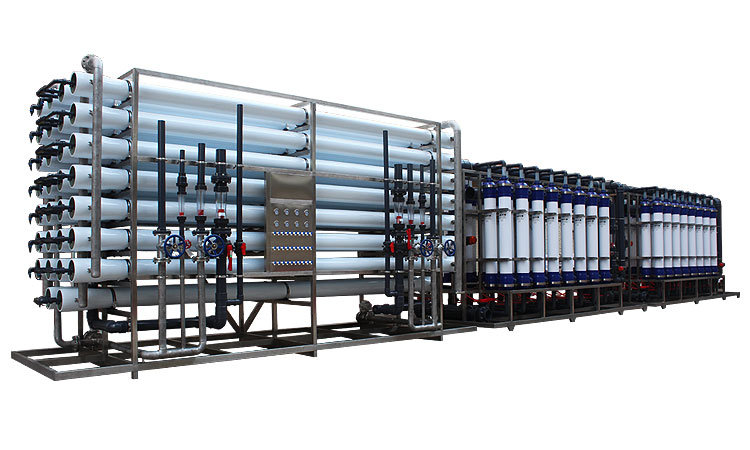 The “Magic” of Turning Seawater into Freshwater: Unveiling the Core Secrets of Reverse Osmosis Technology
 Introduction to Reverse Osmosis Water Treatment Equipment
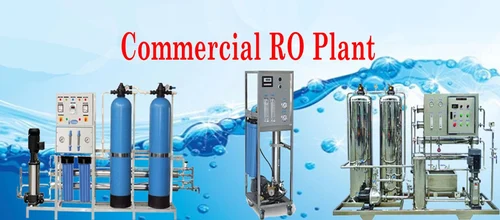 Why is reverse osmosis the “gold standard” for advanced water purification?