Eight Different Methods for Pure Water Treatment Equipment Processes
Pure water refers to purified water typically sourced from municipal tap water. Through multi-stage filtration, harmful substances such as microorganisms can be removed, but this process also eliminates essential minerals like fluoride, potassium, calcium, and magnesium.
I. Ozone Sterilization for Ultra-Pure Water Treatment
The disinfection principle of ozone (O₃) is as follows: At standard temperature and pressure, ozone molecules are unstable and rapidly decompose into oxygen gas (O₂) and single oxygen atoms (O). The latter exhibits high reactivity, exerting potent oxidative effects on bacteria to kill them. Excess oxygen atoms spontaneously recombine into ordinary oxygen molecules (O₂), leaving no toxic residues. Thus, it is termed a pollution-free disinfectant. It not only possesses strong bactericidal capabilities against various bacteria (including hepatitis viruses, E. coli, Pseudomonas aeruginosa, and mixed bacteria) but is also highly effective in killing mycotoxins.
1. Ozone's sterilization mechanism and process are biochemical in nature, oxidatively decomposing glucose oxidase—an enzyme essential for bacteria's glucose oxidation.
2. It directly interacts with bacteria and viruses, disrupting their organelles and ribonucleic acid (RNA), decomposing macromolecular polymers such as DNA, RNA, proteins, lipids, and polysaccharides, thereby destroying bacterial metabolic production and reproduction processes.
3. It permeates cell membranes, penetrates into the cell interior, and acts on outer membrane lipoproteins and internal lipopolysaccharides, causing cellular permeability distortion and leading to cell lysis and death. Furthermore, it dissolves and denatures genetic material, parasitic bacteria, parasitic viral particles, phages, mycoplasmas, and pyrogens (bacterial and viral metabolic products, endotoxins) within dead bacteria.
II. Activated Carbon Adsorption Water Purification Process
Activated carbon primarily removes organic impurities such as discoloration, odors, residual chlorine, and disinfection byproducts through adsorption and filtration.
III. Membrane Microfiltration (MF) Water Purification Process
Membrane microfiltration encompasses three forms: depth filtration, screen filtration, and surface filtration. Depth filtration utilizes substrates made of woven fibers or compressed materials to retain particles through inert adsorption or capture mechanisms, such as common multi-media filtration or sand filtration. As a cost-effective method, it removes over 98% of suspended solids while protecting downstream purification units from clogging, making it a standard pretreatment step. Surface filtration employs a multilayer structure where particles larger than the membrane's internal pores are retained and primarily accumulate on the surface as the solution passes through, as seen in common PP fiber filtration. Surface filtration removes over 99.9% of suspended solids, making it suitable for pretreatment or clarification purposes.
Screen filters feature a uniform structure akin to a sieve, trapping particles larger than the aperture size on the surface (with highly precise pore measurements). Examples include point-of-use security filters in ultrapure water systems. Screen filtration and microfiltration are typically positioned at the final point of use in purification systems to remove residual micro-resin particles, carbon debris, colloids, and microorganisms.
IV. Ion Exchange Water Purification Process
The principle of ion exchange involves exchanging inorganic salts—such as calcium ions (Ca²⁺), magnesium ions (Mg²⁺), sulfate ions (SO₄²⁻), and nitrate ions (NO₃⁻)—in water with cations and anions within ion exchange resins. This process purifies water by replacing the water's ions with those from the resin.
V. Reverse Osmosis (RO) Water Purification Process
This process utilizes pressure as the driving force, exploiting the selective permeability of reverse osmosis membranes—which allow water molecules to pass through while retaining solutes—to extract pure water from sources containing various inorganic substances, organic compounds, and microorganisms. With pore sizes smaller than 10 angstroms (1 angstrom = 10⁻¹⁰ meters), reverse osmosis membranes exhibit exceptional sieving capabilities, achieving up to 99% salt rejection and over 99.5% bacterial removal. This process effectively eliminates impurities such as inorganic salts, sugars, amino acids, bacteria, and viruses from water. Based on raw water quality and product water quality standards, RO is an economical and effective method for purifying tap water when properly designed. It also serves as an excellent pretreatment method for ultrapure water systems.
VI. Ultrafiltration (UF) Pure Water Treatment Process
Microporous membranes remove particles based on pore size, whereas ultrafiltration (UF) membranes function like molecular sieves. They allow solutions to pass through extremely fine pores based on size, achieving separation of molecules of different sizes within the solution.
Ultrafiltration membranes are robust, thin, and selectively permeable. Typically featuring a pore size of approximately 0.01μm, they retain molecules larger than a specific size, including colloids, microorganisms, and pyrogens. Smaller molecules, such as water and ions, pass through the membrane.
VII. Ultraviolet (UV) and Ozone Sterilization for Ultrapure Water Treatment
Ultraviolet radiation emitted by UV lamps at wavelengths of 254nm/185nm effectively kills bacteria and degrades organic matter.
VIII. EDI Pure Water Treatment Process
A novel method for deionized water treatment, also known as Continuous Electrodeionization (EDI). EDI units sandwich ion exchange resins between anion/cation exchange membranes. This process eliminates the need for acid/alkali regeneration of resins, offering superior environmental performance.
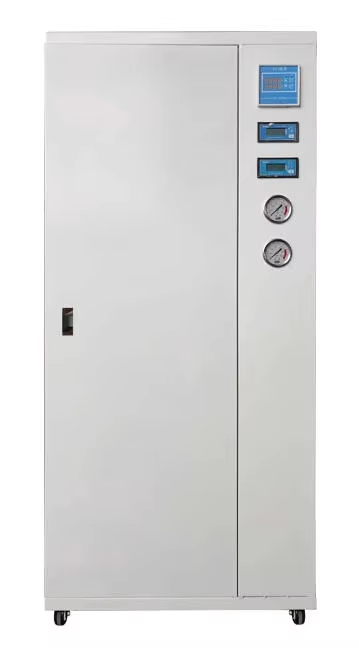 Analysis of the Structure and Working Principle of Ultrapure Water Equipment
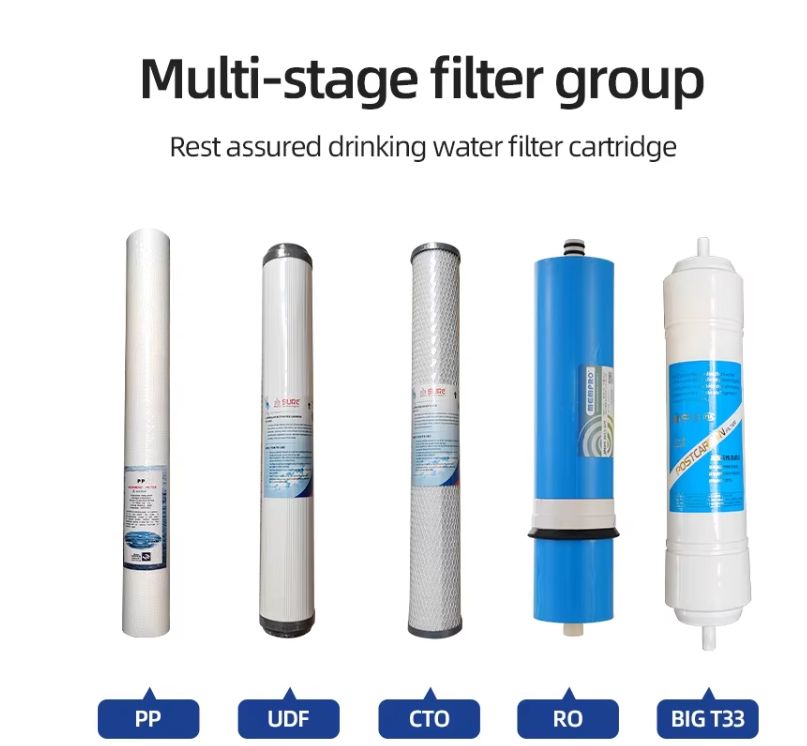 Tips for Using Home Water Purifier Filter Cartridges
 The Battle of Four Membranes: Microfiltration, Ultrafiltration, Nanofiltration, Reverse Osmosis—Which Reigns Supreme in Water Purification?
 Don't Pay for Stupidity! The Ultimate 2026 Water Purifier Guide: Selection, Pitfalls, and Maintenance All in One Article