Essential Water Treatment Terminology Every Water Purification Engineer Uses!
Whether you're a company or an individual working in the water treatment industry, you'll frequently encounter specialized terminology. When you first entered the field, did terms like “reverse osmosis,” “EDI,” “turbidity,” and “SDI” leave you feeling completely lost? Today, we systematically organize core foundational terms in water treatment, covering raw water, purified water, indicators, processes, equipment, and more. Whether you're a technical lead, equipment purchaser, or newcomer to the environmental industry, this article serves as your go-to practical reference guide!
I. Definitions of Common Water Types
Before treating water, you must first understand what type of water you're dealing with:
Raw Water: Untreated natural water or tap water, also called “unprocessed water.”
Clarified Water: Water from which suspended impurities have been removed.
Reclaimed Water: Also known as “recycled water” or “reused water,” it refers to treated domestic or municipal wastewater that meets specific standards and can be reused for non-potable purposes.
Deionized Water: Water with most cations and anions removed, typically through distillation, electrodialysis, reverse osmosis, or ion exchange.
Pure Water: Contains ≤1.0 mg/L total dissolved solids (TDS) and has a conductivity <3 μS/cm, removing strong electrolytes and some weak electrolytes.
Ultrapure water: Contains ≤0.1 mg/L salts and has a conductivity <0.1 μS/cm. Virtually all electrolytes, colloids, and organic matter are removed, making it suitable for high-precision industries like electronics and pharmaceuticals.
Distilled water: Produced through vaporization and condensation. Multiple distillations significantly reduce conductivity.
II. Interpretation of Core Water Quality Indicators
Understanding water quality requires interpreting these key parameters:
Turbidity (NTU): Reflects suspended solids content, serving as an intuitive indicator of water contamination.
pH Value: Measures acidity or alkalinity, where 7 is neutral, <7 is acidic, and >7 is alkaline.
Conductivity (μs/cm) and Resistivity (MΩ·cm): Inverse relationships between these reflect ionic content, serving as crucial indicators of water purity.
TDS (Total Dissolved Solids, units ppm/mg/L): Represents total dissolved inorganic salts, generally positively correlated with conductivity.
Hardness: Primarily indicates calcium and magnesium ion content; excessively high levels may cause scaling.
COD (Chemical Oxygen Demand) and BOD (Biochemical Oxygen Demand): Key indicators for assessing organic pollution in water, commonly used in wastewater treatment evaluations.
SDI (Silt Density Index): Evaluates suspended solids in reverse osmosis system feedwater, directly impacting membrane lifespan.
III. Key Water Treatment Technologies and Processes
The following processes form the core of water purification systems:
Reverse Osmosis (RO): Utilizes semi-permeable membranes to allow water passage while retaining ions under pressure, achieving desalination rates exceeding 97%.
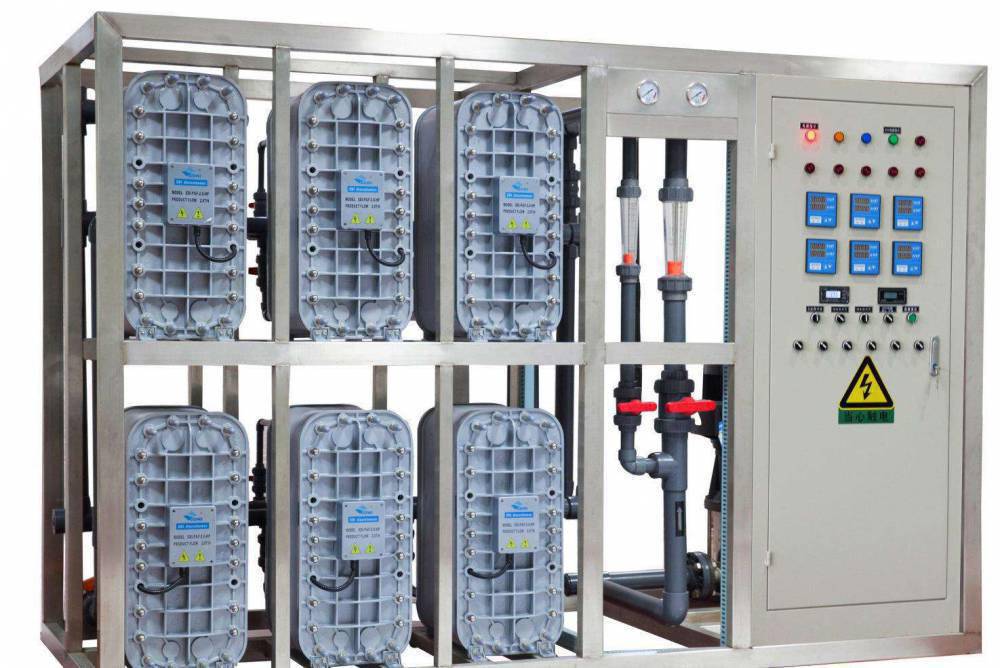
EDI (Electrodeionization): Combines electrodialysis with ion exchange, eliminating the need for acid/base regeneration to sustainably produce ultrapure water.
Ion Exchange: Removes ions from water using resin, commonly used for softening and desalination.
Aeration: Introduces oxygen into water to promote microbial metabolism, a critical step in wastewater biological treatment.
Flocculation and Sedimentation: Adds flocculants to aggregate suspended solids, facilitating separation through settling.
Adsorption: Utilizes materials like activated carbon to adsorb and remove organic compounds, residual chlorine, etc.
IV. Equipment and Chemical Fundamentals
Scale Inhibitors: Prevent membrane fouling to extend equipment lifespan.
Ion Exchange Resins: Remove ions from water; categorized as cation or anion resins.
V. Common Contaminants and Treatment Targets
Residual Chlorine: Active chlorine remaining after municipal disinfection may impact downstream processes; typically removed with activated carbon.
Iron, Manganese, Aluminum: Trace amounts cause coloration, odor, and scaling, significantly impacting RO membranes.
Organic Contamination: Originating from domestic and industrial wastewater, treatable via biological or advanced oxidation processes.
Suspended Solids (SS): Including silt, microorganisms, etc., removable through filtration or sedimentation.
VI. Practical Concepts:
Recovery Rate, Salt Rejection Rate, Product Water Flow Rate Recovery Rate: The ratio of product water flow to feed water flow, indicating the system's water resource utilization efficiency.
Salt Rejection Rate: (Feed water conductivity - Product water conductivity) / Feed water conductivity, reflecting membrane performance.
Product Water Flow Rate (Water Flux): The volume of water passing through the membrane per unit time, commonly expressed in “tons per hour.”
Water Hammer: Pressure fluctuations caused by sudden changes in water flow velocity within pipelines, which can damage equipment under severe conditions.
Concentration Polarization: Excessive salt concentration on the membrane surface during reverse osmosis, impairing desalination efficiency. This can be mitigated by increasing flow velocity.
VII. Environmental Extension: Wastewater Treatment and Reuse
Wastewater Treatment: Removing pollutants through physical, chemical, or biological methods to purify water bodies.
Wastewater Reuse: Treated water can be utilized for flushing, cooling, landscaping, and other applications, enabling resource circulation.
Scale and Sludge: Scale adheres firmly, impairing heat transfer; sludge is loose and can be partially removed through blowdown.
Conclusion
Mastering these fundamental terms is not only essential for beginners but also crucial for optimizing systems, enhancing water quality, and reducing operational costs. Whether selecting equipment, designing processes, or performing daily maintenance, clear conceptual understanding will help you achieve more with less effort. If you wish to explore any term or process in greater depth, feel free to leave us a comment! We will continue sharing practical water treatment knowledge and technical insights.
This content is compiled based on professional water treatment terminology for reference and learning purposes only. Actual application should be tailored to specific water quality and process requirements.
✅ Bookmark this article for future reference
✅ Share with water treatment colleagues who need it
✅ Follow us for more environmental and water purification insights For specific questions or equipment inquiries, feel free to leave a comment or message us privately!
 RO Pretreatment Practical Handbook: Detailed Analysis of Four Major Raw Water Processes
 The “Heart Switch” of Reverse Osmosis Systems: Feed Water Pressure
 What is EDI Electrodeionization Technology? Reverse Osmosis + EDI vs Traditional Ion Exchange: Your Ultimate Selection Guide!
 Classification Summary of Various Membranes