First, let's understand what softened water is.
In daily life, we often notice scale forming on the inner walls of kettles after prolonged use. What causes this? It turns out that the water we use contains significant amounts of inorganic salts, such as calcium and magnesium salts. These salts remain invisible in water at room temperature. However, when heated and boiled, many calcium and magnesium salts precipitate out as carbonates. These deposits adhere to the kettle walls, forming scale. We typically measure the concentration of calcium and magnesium ions in water using the “hardness” metric. One degree of hardness corresponds to 10 milligrams of calcium oxide per liter of water. Water with a hardness below 8 degrees is classified as soft water, while water above 17 degrees is considered hard water. Water with a hardness between 8 and 17 degrees is termed moderately hard water. Rainwater, snowmelt, and water from rivers, lakes, and seas are generally soft water, whereas spring water, deep well water, and seawater are typically hard water.
Now let's examine the differences between softened water and other types of water:
Raw water refers to untreated water. Broadly speaking, water entering a water treatment process is also termed the raw water for that treatment. For example, water delivered from a source to a clarification tank for treatment is called raw water.
Softened water refers to water from which hardness (primarily calcium and magnesium ions) has been removed or reduced to a certain degree. During the softening process, only the hardness is reduced while the total salt content remains unchanged.
Deionized water refers to water from which salts (primarily strong electrolytes dissolved in water) have been removed or reduced to a certain extent. Its conductivity is typically 1.0–10.0 µS/cm, resistivity (at 25°C) is (0.1–1.0) × 10⁶ Ω·cm, and salt content is 1–5 mg/L.
Pure water refers to water from which strong electrolytes and weak electrolytes (such as SiO₂, CO₂, etc.) have been removed or reduced to a certain level. Its conductivity is generally 1.0–0.1 µS/cm, with resistivity (at 25°C) (1.0–10.0) × 10⁶ Ω·cm. Its salt content is <1 mg/L.
Ultrapure water refers to water where conductive media are almost completely removed, while non-ionizable gases, colloids, and organic substances (including bacteria) are also reduced to very low levels. Its conductivity is typically 0.1–0.055 µS/cm, resistivity (>10×10⁶ Ω·cm at 25°C), and salinity <0.1 mg/L. Ideal pure water (theoretically) has a conductivity of 0.05 µS/cm and a resistivity (at 25°C) of 18.3 × 10⁶ Ω·cm.
What is water softening treatment?
Strong acid cation exchange resin is used to replace calcium and magnesium ions in the source water. After filtration through this softening equipment, the boiler feedwater becomes extremely low-hardness softened purified water for boilers.
Working Principle
Ion Exchange Method: Utilizes specific cation exchange resin to replace calcium and magnesium ions in water with sodium ions. Due to sodium salt's high solubility, this prevents scale formation caused by temperature increases.
Features and Effects: Provides stable and precise results with mature technology. Can reduce hardness to zero.
Applications: Catering, food processing, chemical industry, pharmaceuticals, air conditioning systems, industrial circulating water, and other fields. Currently the most widely adopted standard method.
Electromagnetic Method: Applies an electric or magnetic field to alter ion properties, thereby modifying the deposition rate and physical characteristics of calcium carbonate (magnesium carbonate) to prevent hard scale formation.
Characteristics and Effects: Low equipment investment, easy installation, and low operating costs. Effectiveness lacks stability with no unified measurement standards. Since its primary function is to influence the physical properties of scale within a limited range, the treated water has limitations in usage duration and distance.
Scope of Application: Primarily used for treating circulating cooling water in commercial settings (e.g., central air conditioning systems). Not suitable for industrial production or boiler feedwater treatment.
Membrane Separation Methods:
Nanofiltration (NF) and reverse osmosis (RO) membranes can intercept calcium and magnesium ions in water, fundamentally reducing water hardness.
Hardness reduction is limited to a specific range.
Characteristics & Effects:
Delivers significant and stable results with broad applicability for treated water. Requires high inlet water pressure and involves higher equipment investment and operating costs.
Applications:
Rarely used for dedicated softening treatment.
Lime Method: Adds lime to the water.
Characteristics/Effects: Can only reduce hardness to a certain extent.
Applications: Suitable for high-flow, highly hard water.
Chemical Dosage Method: Adds specialized scale inhibitors to alter the bonding characteristics between calcium/magnesium ions and carbonate ions, preventing scale precipitation and deposition.
Characteristics and Effects: Requires relatively low initial investment and offers broad adaptability. Operating costs increase significantly with large water volumes.
Scope of Application: Due to the addition of chemicals, water application is highly restricted. Generally unsuitable for drinking, food processing, industrial production, etc. Rarely used in residential applications.
Water Softening Equipment Workflow and Operational Requirements
1) Water Softening Equipment Workflow
The process consists of five stages: production (sometimes termed “water production”), backwashing, brine absorption (regeneration), slow rinsing (exchange), and fast rinsing. All softening equipment follows a highly similar sequence, though additional steps may exist due to specific process requirements or control needs. All sodium ion-exchange-based water softening equipment is developed from these five core processes (with fully automatic systems adding a brine refill step).
Backwashing: After operating for a period, the equipment traps significant impurities from the raw water at the top of the resin bed. Removing these impurities fully exposes the ion-exchange resin, ensuring effective regeneration. Backwashing involves water flowing into the resin bed from the bottom and exiting from the top, flushing away trapped contaminants. This process typically takes 5-15 minutes.
Brine Absorption (Regeneration): This involves injecting brine solution into the resin tank. Traditional systems use a brine pump, while fully automatic units employ a dedicated internal jet pump to draw brine (provided sufficient inlet water pressure is available). In practical operation, slow-flowing brine through the resin achieves better regeneration than simple brine immersion. Thus, water softeners employ this slow-flow method, typically lasting about 30 minutes, though actual duration depends on salt usage.
Slow Rinse (Exchange): After brine passes through the resin, the process of slowly flushing all residual salt from the resin using raw water at the same flow rate is called the slow rinse. Since calcium and magnesium ions on functional groups continue to be exchanged for sodium ions during this rinse, practical experience indicates this stage constitutes the primary regeneration process. Consequently, many refer to it as the exchange phase. This phase typically lasts as long as the brine absorption phase, approximately 30 minutes.
Fast Rinse: To thoroughly remove residual salt, the resin is flushed with raw water at a flow rate close to actual operating conditions. The final effluent from this process should be compliant softened water. Generally, the fast rinse phase lasts 5-15 minutes.
2) Technical Specifications and Operational Requirements for Water Softening Equipment:
Inlet Water Pressure: 0.18–0.6 MPa
Operating Temperature: 1–55°C
Source Water Hardness: <8 mmol/L
Operation Mode: Automatic/Manual
Outlet Water Hardness: ≤0.03 mmol/L
Regenerant: NaCL
Regeneration Method: Co-current/Counter-current
Exchange medium: 001*7 strong acid ion exchange resin
Control method: Time/Flow
Power supply: 220V/50Hz
Functions of water softening treatment:
1. Water softening equipment significantly reduces fuel waste. When boiler tubes are scaled, a 1mm scale layer on a boiler operating at 1.4MPa pressure wastes 8% of fuel.
2. Improves thermal efficiency and reduces output loss
Scale buildup on boiler evaporation surfaces impedes heat transfer from the fire side to the water side, diminishing boiler output. Inadequate water treatment causing scale formation can reduce boiler evaporation capacity by one-third, leading to insufficient steam supply and preventing automated production lines from starting.
3. Application of Water Softening Equipment
Reduces Boiler Maintenance Requirements
Scale buildup on boiler plates or pipes is extremely difficult to remove. More critically, scale-induced issues like leaks, cracks, wear, deformation, and corrosion not only damage the boiler but also require significant labor and resources for repairs. This shortens operational time and increases maintenance costs.
4. Application of Water Softening Equipment
Reduce Safety Hazards
Boiler accidents caused by scale account for over 20% of all boiler incidents, resulting in equipment damage and posing risks to personnel safety. Water treatment infrastructure and operational costs represent one-quarter of total savings.
Water Softening Equipment
Water softening equipment, as the name implies, reduces water hardness by primarily removing calcium and magnesium ions. In layman's terms, it lowers water hardness through functions such as calcium/magnesium ion removal, water quality activation, bacterial/algal control, and scale prevention/removal. During the water softening process, these systems do not reduce the total salt content in water. They find extensive application in hot water boiler systems, heat exchange systems, industrial cooling systems, central air conditioning systems, and other water-using equipment systems.
Working Principle
Since water hardness is primarily formed and indicated by calcium and magnesium, cation exchange resin (water softener) is generally used to replace Ca²⁺ and Mg²⁺ (the main components forming scale) in water. As Ca²⁺ and Mg²⁺ accumulate within the resin, its efficiency in removing these ions gradually decreases.
After absorbing a certain amount of calcium and magnesium ions, the resin must undergo regeneration. This process involves flushing the resin bed with brine from the salt tank, displacing the hardness ions from the resin. These ions are then discharged from the tank with the regeneration waste liquid, restoring the resin's softening exchange capacity.
Since water hardness is primarily formed and indicated by calcium and magnesium ions, the principle of sodium ion exchange softening involves passing raw water through sodium-type cation exchange resin. This causes the hardness components Ca²⁺ and Mg²⁺ in the water to exchange with Na⁺ in the resin, thereby adsorbing Ca²⁺ and Mg²⁺ and softening the water.
Workflow
The process involves five stages: operation (sometimes termed water production), backwashing, brine absorption (regeneration), slow rinsing (displacement), and fast rinsing. All softening equipment follows a highly similar sequence, though additional steps may exist due to specific process requirements or control needs. All sodium ion-exchange-based water softening equipment is developed from these five fundamental processes (with fully automatic systems adding a brine refill step).
Backwashing: After operating for a period, the equipment traps significant contaminants from the raw water at the top of the resin bed. Removing these contaminants fully exposes the ion-exchange resin, ensuring effective regeneration. Backwashing involves water flowing into the resin bed from the bottom and exiting from the top, flushing away trapped contaminants. This process typically takes 5-15 minutes.
Brine Absorption (Regeneration): This involves injecting brine solution into the resin tank. Traditional systems use a brine pump, while fully automatic units employ a dedicated internal jet injector (requiring only sufficient inlet water pressure). In practical operation, slow-flowing brine through the resin achieves better regeneration than simple brine immersion. Thus, water softeners employ this slow-flow method, typically lasting about 30 minutes, though actual duration depends on salt usage.
Slow Rinse (Exchange): After brine passes through the resin, the process of slowly flushing all residual salt from the resin using raw water at the same flow rate is called the slow rinse. During this rinse, a significant amount of calcium and magnesium ions on functional groups are still exchanged for sodium ions. Based on practical experience, this stage constitutes the primary regeneration process, hence it is often referred to as the exchange phase. This process generally lasts the same duration as the brine absorption phase, approximately 30 minutes.
Fast Rinse: To thoroughly remove residual salt, the resin is rinsed with raw water at a flow rate close to actual operating conditions. The final effluent from this process should be compliant softened water. Typically, the fast rinse lasts 5-15 minutes.
Selecting Appropriate Water Softening Equipment for Different Applications 1. Application Scope of Water Softening Equipment: ① Heating ② Cooling makeup water ③ Process water ④ Steam boilers ⑤ Steel smelting ⑥ Chemical and pharmaceutical manufacturing
2. System water usage requirements by industry
System water usage refers to hourly water consumption, average flow rate, and peak flow rate. Equipment selection should be based on supply timing. For non-continuous supply, single-valve single-tank units suffice; continuous supply requires dual-bed centralized control or dual-control dual-bed series softening systems.
3. Water source hardness
For harder water sources, the same model of water softener will experience shorter production cycles and lower output. This leads to more frequent regeneration cycles, reducing resin lifespan. In such cases, a larger model with increased resin volume should be selected.
II. Selection of Water Softening Equipment
① Controller: Available in automatic and manual control types. Brands may be imported or domestically produced.
② Resin Tank: Tank materials include fiberglass-reinforced plastic (FRP), carbon steel, and stainless steel.
③ Control Modes: - Flow-Based: Automatically regenerates when treated water volume reaches preset threshold. Suitable for all water supply systems requiring softening. - Time-Based: Regenerates based on scheduled intervals. Ideal for systems with stable water demand, with minimum 24-hour regeneration cycle.
④ Equipment configurations:
Single-control single-bed: Water supply stops for 2 hours during regeneration or continues with raw water (hard water bypass).
Single-control dual-bed: Alternating water supply, one active one standby.
Dual-control dual-bed: Alternating water supply, one active one standby. Dual-control dual-bed: Simultaneous water supply, alternating regeneration.
Multi-control multiple-bed: Three or more softening resin tanks in parallel, suitable for large-scale water supply systems.
Widely applicable for softening makeup water in steam boilers, hot water boilers, heat exchangers, evaporative condensers, air conditioning systems, direct-fired engines, and similar systems. Also suitable for domestic water treatment in hotels, restaurants, office buildings, apartments, and homes, as well as softened water processing in food, beverage, brewing, laundry, dyeing, chemical, and pharmaceutical industries.
Technical Specifications
1. Inlet Water Pressure: 0.2~0.5 MPa
2. Raw Water Hardness: <12 mmol/L (Special design required for raw water hardness >8 mmol/L based on regional water quality)
3. Outlet Water Hardness: <0.03 mmol/L (Meets GB1576-2001 National Low-Pressure Boiler Water Quality Standard);
4. Raw water salinity <1500 mg/L, turbidity <5 NTU, iron ions <0.3 mg/L
5. Power supply: ~220V, 50Hz
6. Salt consumption <100g/equivalent (depends on raw water hardness)
7. Water consumption <2%; Power consumption <50W Fully Automatic Water Softening and Desalination Equipment
Primary Technical Specifications
1. Technical Specifications for Power Construction, Installation, and Acceptance
2. Quality Acceptance and Evaluation Standards for Thermal Power Construction
3. JB/T74-94 Technical Conditions for Pipeline Flanges
4. Sandblasting rust removal shall comply with GB8923
5. DL/T5054-1996 Technical Regulations for Steam and Water Pipeline Design in Thermal Power Plants
6. GB/T18300-2001 Technical Conditions for Automatic Control Sodium Ion Exchangers
7. GB 1576-2001 Water Quality for Low-Pressure Boilers
8. GB 5462-199 Industrial Salt
9. GB/T 13659-1992 001*7 Strong Acidic Styrene-Based Cation Exchange Resin
10. JB/T 2932-1999 Technical Conditions for Water Treatment Equipment
11. GB/T 13384-1992 General Technical Requirements for Packaging of Electromechanical Products
Equipment Classification
Industrial water treatment equipment, drinking water treatment equipment, filling equipment, and water treatment accessories.
Industrial Water Treatment Equipment
Large reverse osmosis systems for power plants; ultrapure water systems for pharmaceutical and electronics industries; purified water systems for horticultural irrigation; chemical dosing equipment; boiler water softening systems;
Drinking Water Treatment Equipment
Pure water equipment for food and beverage industries, pure water/mineral water equipment for water plants, rural drinking water equipment, direct drinking water equipment for hotels, schools, government agencies, and canteens;
Filling Equipment
Large barrel and small bottle filling lines, barrel brushing and cap removal machines;
Water Treatment Accessories
Filter media, filter cartridges, booster pumps, reverse osmosis membranes, membrane housings, precision filters, flow meters, pressure gauges, ozone generators, UV sterilizers, scale inhibitors, etc.
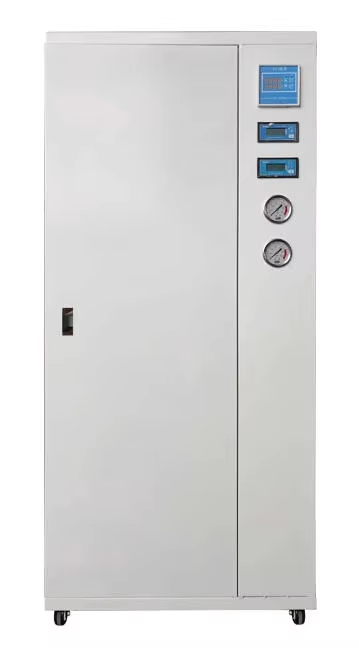 Analysis of the Structure and Working Principle of Ultrapure Water Equipment
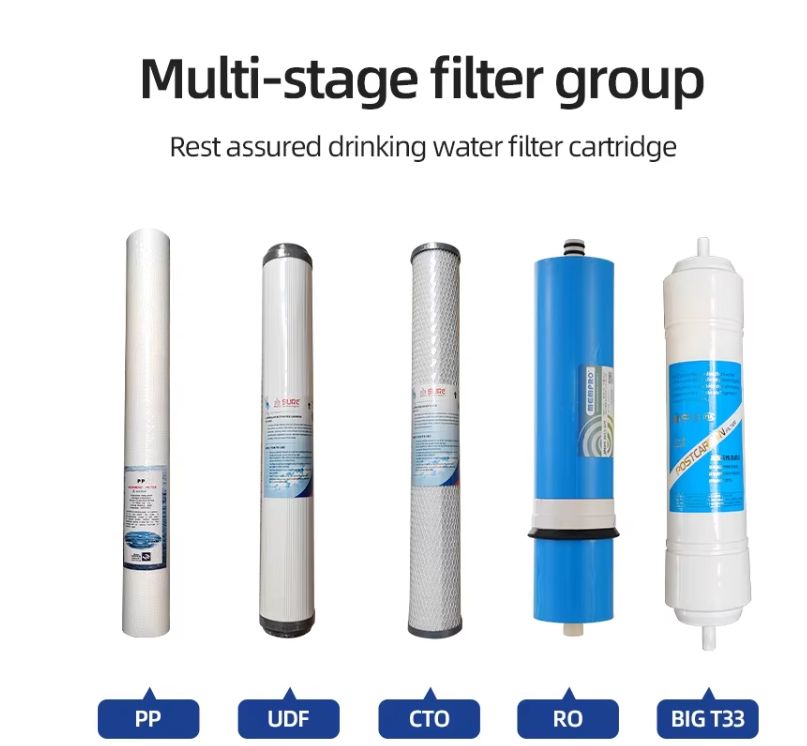 Tips for Using Home Water Purifier Filter Cartridges
 The Battle of Four Membranes: Microfiltration, Ultrafiltration, Nanofiltration, Reverse Osmosis—Which Reigns Supreme in Water Purification?
 Don't Pay for Stupidity! The Ultimate 2026 Water Purifier Guide: Selection, Pitfalls, and Maintenance All in One Article