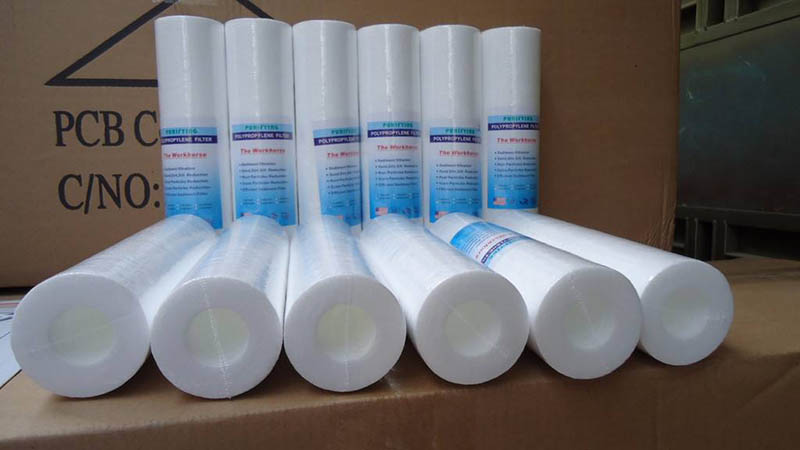
PP cotton filter element, also known as melt-blown pp filter element, is a tubular filter element made of non-toxic and odorless polyester fiber particles after heating, melting, spinning, pulling, and receiving forming; if the raw material is mainly polyester fiber, it can be It is called PP meltblown filter element.
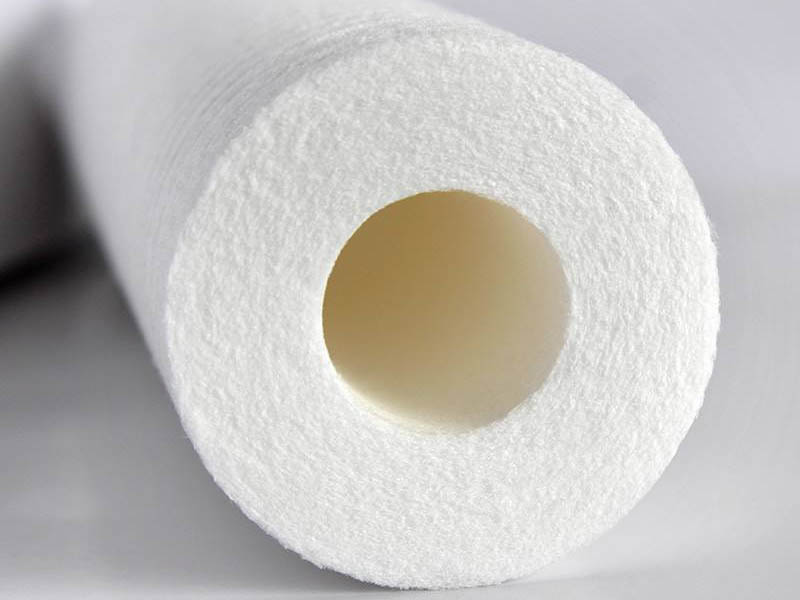
PP cotton filter refers to polypropylene meltblown filter, and PET is polyester filter. The meltblown raw material is mainly PP and a small amount of PET.
The filter element is a new type of precision filter element, which has the characteristics of small volume, large filter area, high precision, no pollution, convenient installation and replacement, etc. Because of the use of microporous membrane filtration, it has small adsorption and will not retain filtrate. Moreover, it has wide chemical compatibility and wide applicability. The joint of the filter element adopts the international common form: the end caps are 226, 222, and flat, and the ports are two forms of triangular fins and flat heads.
It is not only used in large quantities of water purification. It also has excellent chemical compatibility and is suitable for filtration of strong acids, strong alkalis and organic solvents. Strong dirt holding capacity, long service life and low cost.
PP cotton filter function and characteristics
1. Can effectively remove various particulate impurities in the filtered liquid;
2. It can be multi-layered deep structure and has a large amount of dirt;
3. The filtration flow is large and the pressure difference is small;
4. Does not contain any chemical adhesive, more hygienic and safe;
5. Resistant to acid, alkali, organic solution and oil, with good chemical stability;
6. It integrates surface, deep, coarse and fine filtration; it has the characteristics of large flow, corrosion resistance, high pressure resistance and low cost. It is used to block large particles such as rust, sediment, and insect eggs in the water.
PP cotton filter application field
1. Pharmaceutical industry: pre-filtration of various injections, liquid medicines and injection bottle washing water, pre-filtration of large infusions and various antibiotics and traditional Chinese medicine injections. Food industry: filtration of alcohol, beverages and drinking water.
2. Electronics industry: pre-filtration of pure water and ultrapure water.
3. Petroleum and chemical industry: filtration of various organic solvents, acids and alkalis, oil field water injection filtration.
4. PP meltblown filter element can be widely used in: pure water, electroplating solution, printed circuit board, solvent, paint, detergent, medical water, oral industry, pharmaceutical injection, beverage, alcohol and other industries liquid filtration, compressed air, Filtration of gases.
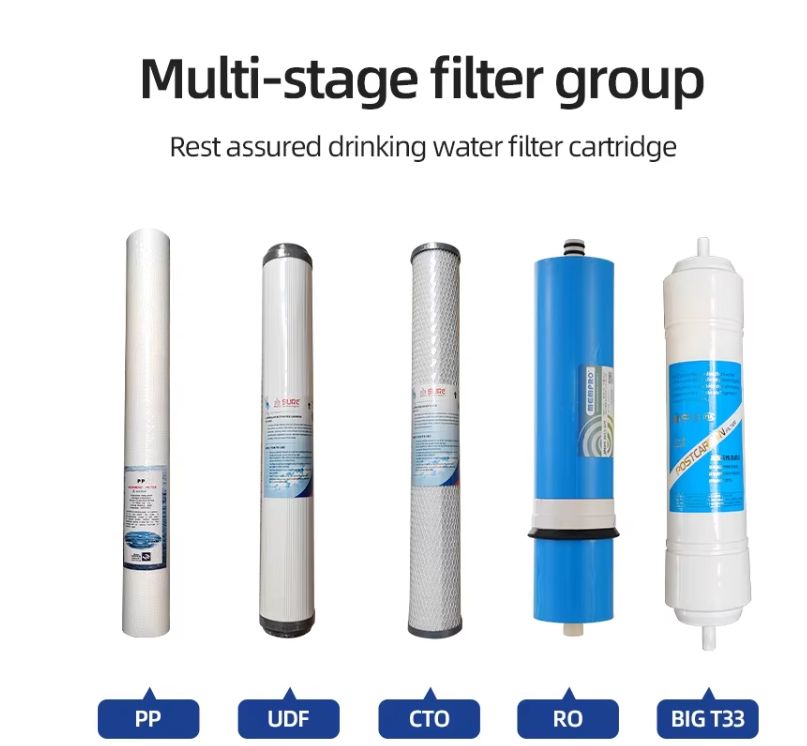 Tips for Using Home Water Purifier Filter Cartridges
 The Battle of Four Membranes: Microfiltration, Ultrafiltration, Nanofiltration, Reverse Osmosis—Which Reigns Supreme in Water Purification?
 Don't Pay for Stupidity! The Ultimate 2026 Water Purifier Guide: Selection, Pitfalls, and Maintenance All in One Article
 Working Principle and Core Technology of Water Softening Equipment