The “Magic” of Turning Seawater into Freshwater: Unveiling the Core Secrets of Reverse Osmosis Technology
As over one-third of the global population faces water scarcity and coastal cities grapple with water shortages, a technology capable of transforming bitter seawater into clear freshwater is emerging as the key to solving this crisis—reverse osmosis seawater desalination. From supplying freshwater to remote islands to supplementing water sources for major coastal cities, this “against-the-current” force is quietly reshaping the global distribution of water resources through its continuously improving efficiency and cost-effectiveness. Today, we delve into its core secrets to uncover the scientific ingenuity behind this “turning water into a spring” technology.
From “Natural Osmosis” to “Artificial Reverse Osmosis”
To grasp reverse osmosis, we must first revisit the “osmosis” phenomenon studied in middle school biology. When freshwater and saltwater are separated by a semipermeable membrane (permitting small molecules while blocking larger molecules/ions), water molecules naturally ‘migrate’ from the freshwater side to the saltwater side until concentrations on both sides reach equilibrium—this is nature's “law of concentration equilibrium.” Reverse osmosis technology precisely reverses this natural process. By applying pressure exceeding the saltwater's natural osmotic pressure, it forces water molecules to flow against the membrane. Meanwhile, impurities like salt ions (sodium, chloride), heavy metals, and organic compounds are firmly blocked by the membrane. Ultimately, one side of the semipermeable membrane retains concentrated brine (concentrate), while the other side produces freshwater meeting drinking or industrial standards (permeate). This critical “semipermeable membrane” is the heart of reverse osmosis technology.
Early reverse osmosis membranes were primarily made of cellulose acetate. Today's mainstream aromatic polyamide composite membranes feature surface pore sizes as small as 0.1-1 nanometers (equivalent to one-hundred-thousandth the diameter of a human hair). This minuscule scale allows them to intercept over 99% of salt ions while efficiently permitting water molecules to pass through. It is precisely this “super filter” that provides the foundational magic for transforming seawater into freshwater.
From “Niche Experiment” to “Mainstream Choice”
Before reverse osmosis emerged, distillation (heating seawater to evaporate and condense freshwater) dominated desalination. However, distillation consumes enormous energy (roughly 10-15 kWh per ton of freshwater produced) and requires significant capital investment, hindering large-scale adoption for years. Reverse osmosis rose precisely by delivering a decisive blow to traditional methods:
◾High Efficiency & Energy Savings: Through advancements in membrane materials and processes, modern reverse osmosis systems now consume only 3-5 kWh per ton of freshwater—just one-third to one-fifth of traditional distillation. This breakthrough transformed desalination from a “high-cost option” into an “economically viable solution,” particularly suited for large-scale deployment.
◾ Exceptional Separation Efficiency: Whether treating seawater (salinity ~35,000 mg/L) or brackish water (salinity 1,000–10,000 mg/L), reverse osmosis membranes achieve over 99% desalination rates. The produced freshwater directly meets drinking water standards (salinity <500 mg/L) and even satisfies ultra-pure water requirements for electronics manufacturing.
◾Highly Adaptable: Reverse osmosis plants can be scaled from small units supplying dozens of tons of freshwater daily to islands or fishing vessels, to large-scale facilities like Saudi Arabia's Jubail desalination plant (the world's largest RO desalination plant with a daily capacity exceeding 1.4 million tons), serving cities with populations in the tens of millions. Its modular design enables shorter construction cycles and flexible expansion.
◾ Superior Environmental Performance: Unlike distillation's high-temperature heating, reverse osmosis operates at ambient temperatures with zero greenhouse gas emissions. Furthermore, through proper treatment of brine (e.g., mixing with power plant cooling water for discharge or utilizing it in salt chemical production), its impact on marine ecosystems is minimized. These combined advantages propelled reverse osmosis from less than 10% of the global desalination market share in 1980 to over 60% today, cementing its status as the undisputed “core technology.”
Continuous Technological Innovation
Despite its mainstream adoption, reverse osmosis technology continues to evolve. Engineers and researchers persistently push boundaries across multiple dimensions to reduce costs and enhance efficiency:
◾ Membrane Material Upgrades: Researchers have enhanced polyamide membrane structures to develop “anti-fouling membranes” and “high-flux membranes.” The former reduces impurity adhesion on membrane surfaces, extending membrane lifespan from 3-5 years to 5-8 years. The latter allows more water molecules to pass through at the same pressure, increasing water yield per unit area and further lowering costs.
◾ Energy recovery technology: During desalination, the discharged brine retains significant pressure (approximately 80% of the feed pressure). Energy recovery devices (such as turbines or pressure exchangers) capture and reuse this energy, reducing overall system energy consumption by 30%-40%. Advanced reverse osmosis plants now routinely incorporate these systems, making them a critical component for cost reduction and efficiency gains.
◾ Intelligent Control: Leveraging IoT and AI technologies, modern reverse osmosis systems monitor parameters like feedwater quality, membrane pressure, and product water flow in real time. They automatically adjust operating pressure and cleaning cycles, reducing manual intervention while preventing membrane over-consumption. This ensures the system consistently operates at optimal performance.
The value of reverse osmosis technology has long transcended the singular goal of “addressing freshwater scarcity.” It has become a vital node in constructing a closed-loop water cycle: “seawater → freshwater → reclaimed water.” In coastal cities, reverse osmosis desalinated water complements surface and groundwater sources, forming a “multi-source water complementarity” system that alleviates urban water supply pressures. For instance, in China's Qingdao and Tianjin, reverse osmosis desalinated water integrates with surface and groundwater to create a “multi-source water complementarity” system, easing urban water supply pressures. - wastewater - reclaimed water" closed-loop water cycle.
In coastal cities, reverse osmosis desalinated water complements surface and groundwater sources, alleviating urban water supply pressures. For instance, cities like Qingdao and Tianjin in China have established multiple large-scale reverse osmosis desalination projects, with desalinated water accounting for 10%-20% of their total urban water supply. In island regions, reverse osmosis systems free residents from dependence on rainfall for water. For instance, the reverse osmosis desalination plant in China's Xisha Islands has a daily production capacity of thousands of tons, meeting the water needs of both island residents and tourists. In the industrial sector, reverse osmosis desalinated water can serve as production water for industries like power generation and chemicals, reducing reliance on freshwater.
More importantly, as technological costs continue to decline (current global reverse osmosis desalination costs have fallen to $0.5–1 per ton), this technology is expanding from coastal areas to inland regions, providing solutions for brackish water desalination in arid zones. In the future, integrating reverse osmosis with renewable energy sources like solar and wind power may enable “zero-carbon desalination,” making the “blue lifeblood” a true cornerstone of sustainable development.
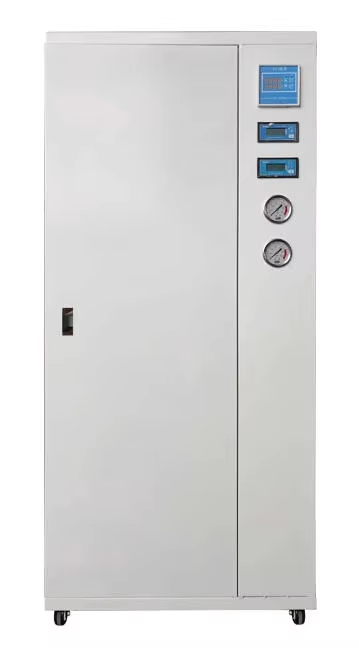 Analysis of the Structure and Working Principle of Ultrapure Water Equipment
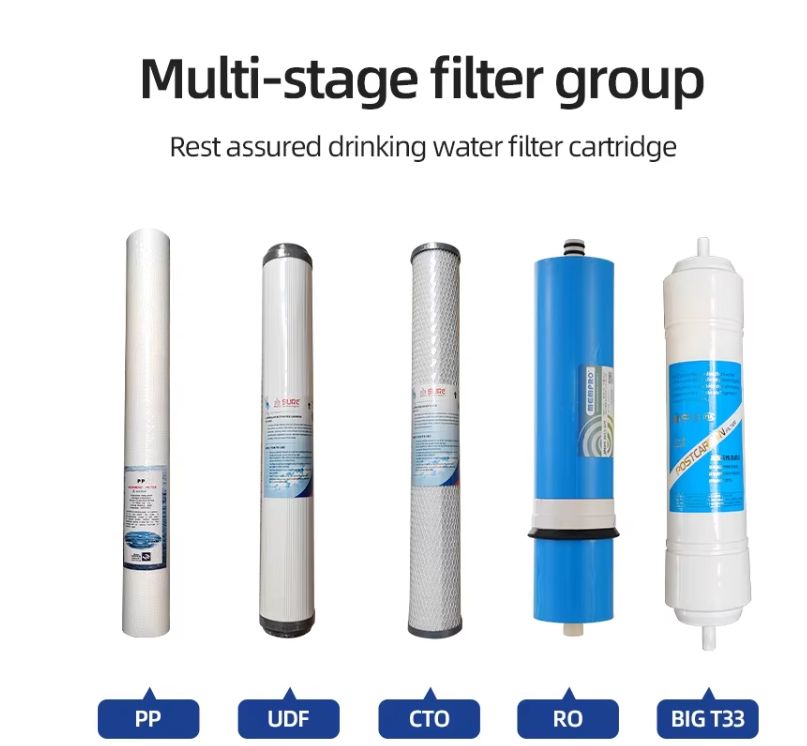 Tips for Using Home Water Purifier Filter Cartridges
 The Battle of Four Membranes: Microfiltration, Ultrafiltration, Nanofiltration, Reverse Osmosis—Which Reigns Supreme in Water Purification?
 Don't Pay for Stupidity! The Ultimate 2026 Water Purifier Guide: Selection, Pitfalls, and Maintenance All in One Article