What Should You Consider When Choosing a Commercial Water Purifier?
With growing concerns over water quality, commercial water purifiers have become essential equipment for ensuring safe drinking water in businesses, schools, restaurants, and other public spaces. However, faced with a vast array of products and complex technical specifications on the market, how do you select a commercial water purifier that truly meets your needs? Below, a direct-drinking water machine manufacturer outlines the key considerations for purchasing a commercial water purifier.
Commercial water purifiers are essentially an extension of household models, most notably featuring higher flow rates to meet the drinking water needs (boiled water, room-temperature water, ice water) of 30 or more people. They are primarily deployed in public and commercial settings such as government offices, office buildings, hospitals, schools, restaurants, hotels, and airports. Currently, many enterprises rely on bottled water or electric water heaters (both large and small) for drinking water. Commercial water purifiers provide users with fresh, safe, hygienic water that meets national standards. They address issues associated with bottled water, such as unclear sources and bacterial contamination, as well as problems caused by electric water heaters, like scale buildup and repeatedly boiled water. Commercial water purifiers eliminate the need for frequent water procurement, storage, and replacement, offering a safer, healthier, and more convenient experience for daily life and work.
Ensuring drinking water safety and obtaining high-quality direct drinking water is the ultimate goal of purchasing water purifiers, with commercial units demanding higher standards. The commercial water purification sector serves larger drinking populations; any water quality safety issue would affect a broader scope and entail greater liability—a major concern for commercial water purifier procurement personnel. Many commercial water purifiers boast high flow rates, yet their filtered water quality is poor after testing, often representing only basic filtration. This scenario is common in commercial products. Consequently, the commercial water purification sector demands higher standards for “water quality,” “flow rate,” and durability in purifier products.
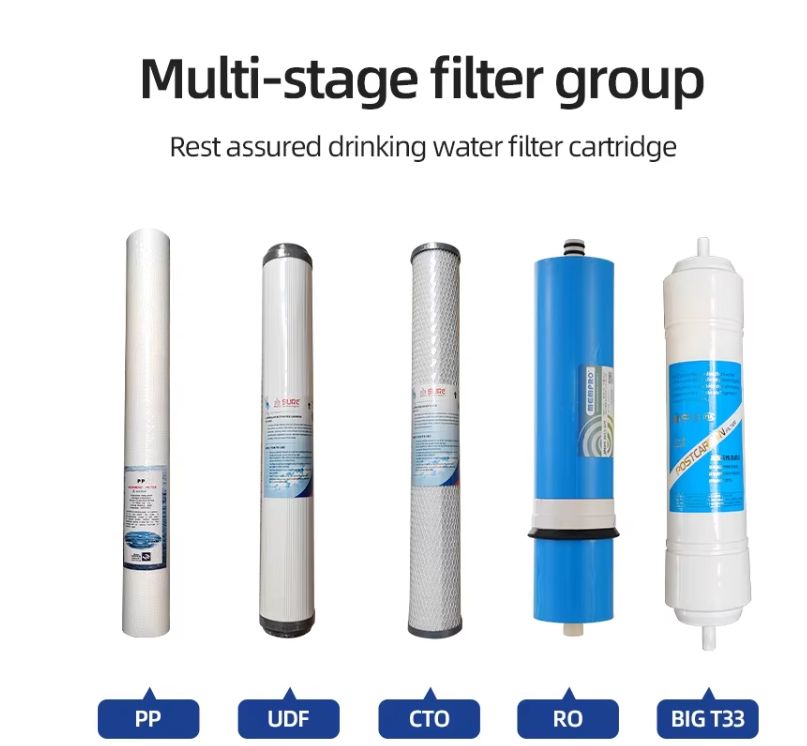
Core Technology: The core differentiation in commercial water purifiers lies in filtration technology, which directly impacts water safety and purity. Current mainstream solutions include reverse osmosis (RO), ultrafiltration (UF), and nanofiltration (NF). RO technology achieves filtration precision down to 0.0001 microns, removing harmful substances like heavy metals and viruses. Its output meets direct drinking standards, making it suitable for areas with high water hardness or severe industrial pollution. For instance, a chain restaurant saw an 80% reduction in scale buildup after switching to RO equipment. Ultrafiltration preserves minerals but cannot filter heavy metals, making it suitable for southern cities with better water quality. Nanofiltration offers a compromise, removing harmful substances while retaining some minerals. It's crucial to note that some low-cost products use a simple combination of activated carbon and PP cotton filters. Such systems only improve taste and cannot guarantee water safety.
Flow Rate Selection: In large public spaces, flow rate is a critical factor. Insufficient flow leads to long wait times and poor user experience. Commercial settings should prioritize the purifier's flow rate parameter (typically measured in GPD, gallons per day). Small offices with fewer than 50 people can opt for a 400G flow rate unit, producing approximately 15 liters per hour. For school cafeterias serving 200 people, models with 800G or higher are recommended; large hotels require central water purification systems exceeding 1200G. A case study at a top-tier hospital demonstrated that installing an 800G reverse osmosis system in its outpatient department completely eliminated peak-hour queues for water. Additionally, consider pressure tank configurations—tankless designs suit space-constrained areas but must ensure adequate instant water production capacity.
Material Safety: Given commercial equipment's prolonged high-load operation, material safety is paramount. Premium products should feature food-grade ABS filter housings, with piping systems certified by NSF. Testing reports indicate substandard stainless steel storage tanks may exceed chromium and nickel limits. When purchasing, request suppliers to provide sanitary permits for water-contact components and verify lead-free soldering at all connections.
Energy Consumption & Wastewater Ratio: Energy usage and wastewater ratio directly impact operational costs for commercial RO systems. Premium models achieve a 1:1 wastewater ratio, while low-end products may reach 3:1. Based on a daily consumption of 2 tons, high-efficiency equipment can save over 500 tons of water annually. One fast-food chain reduced its annual water bill by ¥12,000 per location by upgrading to water-saving equipment.
Filter Cartridge Lifespan and Maintenance Costs: Filter lifespan and maintenance expenses are also critical considerations. Longer-lasting cartridges require less frequent replacements, reducing overall maintenance costs. Opt for commercial water purifiers with extended filter life and low maintenance expenses.
Water Quality Monitoring Functionality: Commercial water purifiers with built-in monitoring capabilities track water quality in real time, alerting users when cartridges need replacement to ensure consistent, safe water quality.
Installation and Maintenance: Installation and maintenance requirements for commercial water purifiers must also be evaluated. Selecting products that are easy to install and maintain reduces future hassles and expenses.
Brand and Service: Equipment failures directly impact normal operations, making service systems crucial. Choosing commercial water purifiers from reputable brands with quality service ensures product reliability and after-sales support. Reputable brands typically offer professional installation and maintenance services, enabling prompt issue resolution to minimize operational disruptions and costs. Selecting a commercial water purifier is a critical decision involving public health safety, requiring a shift away from “low-price-first” thinking. It is advisable to conduct on-site evaluations to test details such as actual operating noise levels and water flow rates. When finalizing the contract, clearly define key terms like water quality standards and service response times to ensure long-term safeguards for both water safety and economic efficiency.
To learn more about product features, feel free to contact us for consultation. We are committed to providing you with the optimal drinking water solution!
 Analysis of the Structure and Working Principle of Ultrapure Water Equipment
 Tips for Using Home Water Purifier Filter Cartridges
 The Battle of Four Membranes: Microfiltration, Ultrafiltration, Nanofiltration, Reverse Osmosis—Which Reigns Supreme in Water Purification?
 Don't Pay for Stupidity! The Ultimate 2026 Water Purifier Guide: Selection, Pitfalls, and Maintenance All in One Article