Enhancing Reverse Osmosis Equipment Durability: Practical Tips and Maintenance Strategies
Reverse Osmosis Equipment Pretreatment Commissioning
The quality of pretreatment is crucial for ensuring stable operation of reverse osmosis equipment. When groundwater is used as feedwater for reverse osmosis systems, pretreatment with quartz sand and activated carbon is generally sufficient. However, different considerations apply when using surface water.
Part 1: Reverse Osmosis Equipment Pretreatment Commissioning
01 Pretreatment Chemicals for Reverse Osmosis Equipment
The selection, dosage, and even preparation methods of chemicals used in treatment—including coagulants, flocculants, oxidants, reducing agents, and scale inhibitors—significantly impact reverse osmosis performance. This is particularly true for coagulants and scale inhibitors.
Typically, attention is focused on monitoring iron content in the feedwater. However, elevated aluminum levels in the feedwater can also cause reverse osmosis membrane fouling. Aluminum fouling occurs due to the precipitation of aluminum hydroxide, which typically exists as a colloidal form. This amphoteric hydroxide exhibits minimal solubility within a pH range of 6.5–6.7. If the aluminum coagulation process occurs at excessively high or low pH values, aluminum ions will enter the reverse osmosis system and contaminate the membranes. Therefore, for pretreatment systems using aluminum salts as coagulants, the pH should ideally be controlled between 6.5 and 6.7 to minimize aluminum solubility. Adjust chemical dosing promptly based on water quality, and if possible, regularly monitor aluminum levels in pretreated water, keeping them below 0.05 mg/L.
To prevent scaling on the concentrate side, scale inhibitors are typically added. Current inhibitors are often blended from organic acids and organic phosphates to achieve scaling inhibition and dispersion. If improperly selected or controlled, these organic compounds can foul reverse osmosis membrane elements. They also create a breeding ground for bacteria and microorganisms, posing greater risks to reverse osmosis operation.
02 Temperature
It is widely recognized that temperature significantly impacts the flux of reverse osmosis membrane elements. Therefore, temperature verification is essential when calculating and comparing product water yields. In regions with low winter water temperatures, heating equipment is incorporated into the pretreatment system of reverse osmosis plants. This ensures the reverse osmosis equipment can achieve its designed capacity even during winter months.
In fact, SiO₂ precipitation within membrane elements is closely related to the feedwater temperature of the reverse osmosis system. The silica concentration in the concentrate should not exceed 100 mg/l at 25°C or 25 mg/l at 5°C. Consequently, when pre-treatment systems lack heating equipment, special attention must be paid to silica precipitation contaminating membrane elements during winter. Strict control of silica content in concentrate is essential, ensuring it does not exceed the solubility limit at the prevailing temperature.
Part 2: Training of Reverse Osmosis Equipment Operators
The competency level of operators—specifically their ability to promptly identify and correctly address system defects and potential hazards—is a critical factor influencing reverse osmosis equipment performance. Operator errors pose greater risks to the system, often causing irreversible damage to membrane elements. Thorough flushing before restarting and after operation is essential to prevent residual gases from operating under high pressure, which can cause water hammer and damage membranes. Additionally, ensuring the inorganic salt concentration on the concentrate side does not exceed that of the feedwater prevents scaling and membrane fouling.
part.3 Operational Management of Reverse Osmosis Equipment
01 Regular Inspection of Reverse Osmosis Equipment
Conduct regular inspections and promptly replace security filter cartridges to prevent particulate contamination of reverse osmosis membranes caused by cartridge leakage due to installation or quality issues. Replace cartridges when the inlet pressure differential of the security filter exceeds 0.15 MPa. Inspections should generally occur monthly, with cartridge usage not exceeding six months. During operation, frequently check for gas presence within the security filter to prevent air ingress.
02 Inspection of Reverse Osmosis Membrane Elements
(1) Inspect the first and second stage membrane elements of each reverse osmosis system every six months (or more frequently if necessary).
(2) Open pressure vessel end caps (using specialized tools and performed by skilled technicians).
(3) Inspect the feed section for mechanical impurities, metal oxide deposits, bacterial/microbial growth, membrane discoloration, and scaling.
(4) If necessary, remove reverse osmosis membrane elements for detailed inspection. When extracting feed-side membrane elements, never pull directly; instead, push them out of the pressure vessel in the direction of water flow. Follow the same procedure during reinstallation.
(5) Maintain detailed records after each inspection for comparative analysis.
03 Regularly calibrate all gauges to ensure accurate and reliable instrumentation.
04 Conduct periodic analysis and statistics of reverse osmosis equipment operational data.
Operating pressure, recovery rate (or concentrate discharge volume), feedwater SDI (Silt Density Index), pH, residual chlorine, and temperature are the primary operational control parameters for reverse osmosis units. Desalination rate, product water flow, and pressure differential are the three primary performance monitoring parameters. Strict adherence to these parameters is mandatory during operation management; operating conditions must never be altered arbitrarily. Particular attention must be paid to preventing increased product water flow by raising recovery rates, which can cause scaling on the reverse osmosis membrane surface. Additionally, continued operation when the SDI value exceeds specifications must be avoided to prevent reverse osmosis membrane damage.
 Comprehensive Glossary of Common Water Treatment Terminology
 Introduction to Seawater Desalination Technology—Reverse Osmosis
 The “Magic” of Turning Seawater into Freshwater: Unveiling the Core Secrets of Reverse Osmosis Technology
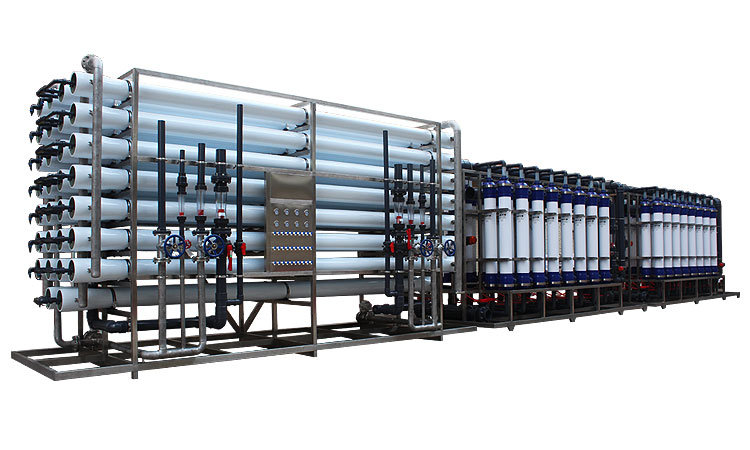
 Introduction to Reverse Osmosis Water Treatment Equipment