Knowledge Post丨Analyzing Different Types of Water Purifiers
Preface: To be honest, my initial understanding of water purifiers, reverse osmosis systems, and similar devices was quite limited. Growing up, we mostly drank boiled water. Later, we used water dispensers, but I still had little concept of water purifiers. I’d often heard them referred to as a waste of money. Now, however, whether due to the pandemic or concerns about water pollution and safety, we’ve been compelled to learn more about them. Later, when renovating my own home, contractors would ask if I planned to install a water purifier or pipeline machine, suggesting pre-wiring or concealed installations for aesthetics. As I delved deeper, I realized these have become essential household appliances—convenient and safe. That said, if you prefer bottled water or access to community water dispensers, you might not need one, though it’s still worth understanding the options. If you prefer not to read extensive details, simply click the titles next to the table of contents to jump to the section you wish to explore. Water is the source of life and the foundation of healthy living. An individual requires approximately 2 liters of water daily, with the body's water content renewing every 5 to 13 days. If the 70% of the human body composed of water is clean, then the cells within have a healthy and refreshing environment. Healthy, clean water boosts the body's immune system and promotes cellular metabolism. This deprives cells of the conditions necessary for malignant transformation and toxin proliferation, naturally reducing the likelihood of illness.
Experts advise that while seeking medical care is important, we must also ensure a steady supply of good water to our cells, striving to create a fresh and healthy environment for them to thrive.
What is a Water Purifier:
I. Water Purification System:
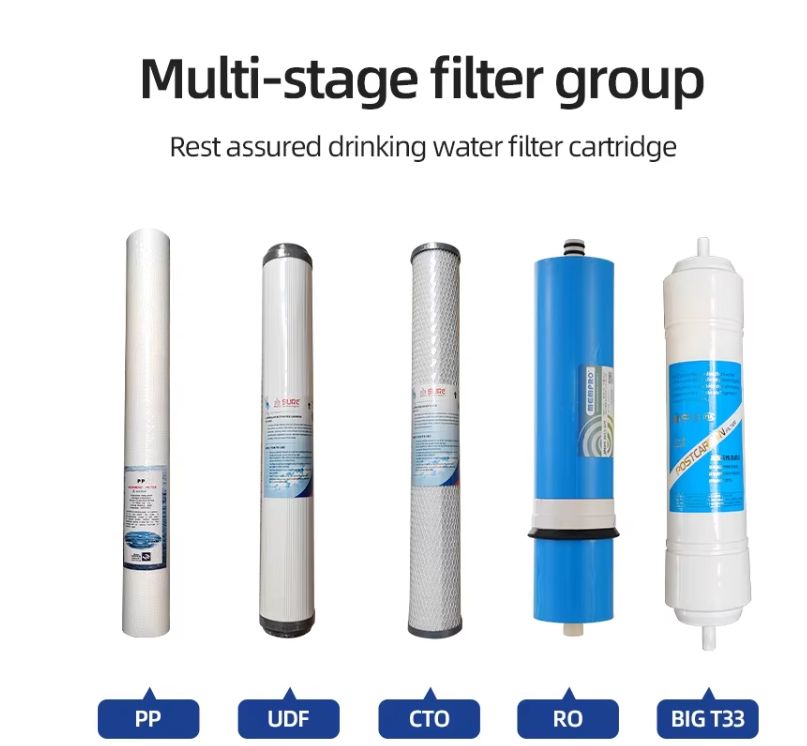
A water purifier is a water treatment device that performs deep filtration and purification according to specific water usage requirements. Its function is to remove suspended solids, heavy metals, bacteria, viruses, residual chlorine, silt, rust, microorganisms, and other contaminants from water. It employs high-precision filtration technology. Household water purifiers typically utilize five-stage or six-stage filtration systems. The five-stage process includes: Stage 1 - PP cotton filter (PPF), Stage 2 - granular activated carbon (UDF) filter, Stage 3 - compressed activated carbon (CTO) filter, Stage 4 - reverse osmosis membrane or ultrafiltration membrane, and Stage 5 - post-activated carbon filter (small T33). The six-stage filtration system adds an additional stage: a weak alkaline energy rod (PPF cartridge + granular activated carbon + sintered activated carbon + ultrafiltration membrane + post-activated carbon + weak alkaline energy rod).
1. Polypropylene Melt-Blown Filter (PPF) Function: Removes solid contaminants such as silt, rust, and algae from water.
2. Softening Resin Filter Function: The softening filter adsorbs heavy metals and excess calcium/magnesium cations from source water, softening hard water. Anion exchange resin can only exchange anions, not cations. Ion exchange resin significantly reduces water hardness, minimizes metal ion deposits in the body, lowers the risk of kidney stones, solves scale issues, and improves water taste. It can be regenerated by periodically soaking in a 6-10% sodium chloride (potassium chloride) solution.
3. Granular Activated Carbon Filter (UDF) Function: Removes residual chlorine, odors, and solid impurities from water.
4. Compressed Activated Carbon Filter (CTO) Function: Further removes residual chlorine, odors, and solid impurities from water.
5. Ultrafiltration Membrane (UF) Filter Function: Removes silt, rust, suspended solids, colloids, and large-molecule organic compounds from water. 6. Maifan Stone Ceramic Ball Filter Function: Maifan stone ceramic balls contain over 30 trace elements beneficial to the human body, including selenium, zinc, nickel, cobalt, manganese, magnesium, calcium, and over 30 other trace elements beneficial to human health. The activation waves emitted by these elements resonate with the natural wave patterns of human cells. As cells resonate with the waves emitted by the maifan stone, they become more vibrant, promoting blood circulation, enhancing metabolism, and accelerating the elimination of bodily waste.
7. Far-Infrared Mineralized Ball Filter Cartridge Function: The infrared-activated mineralized balls feature high infrared emissivity and strong water absorption capacity. They slowly and evenly release over 20 essential trace elements—including zinc, lithium, iodine, and selenium—into purified water, enriching it with beneficial minerals. Utilizing new antibacterial materials free of heavy metals, they achieve safe and long-lasting antimicrobial effects.
8. Energy Filter Cartridge Function: Utilizing nano-high-energy materials produced through advanced technology, this core filter integrates multiple functions—activation, mineralization, mild alkalization, purification, ionization, antioxidant properties, negative potential, detoxification, antibacterial, and sterilization—into the main filter of the energy water machine. It generates water with small molecular clusters, ionization, and negative potential to combat free radicals, producing mineral-rich water abundant in trace elements. Mineral absorption rates reach approximately 70%-90%. Due to its strong and persistent activity, it exhibits exceptional dissolution, penetration, diffusion, emulsification, and cleaning power. The water tastes sweet, is rich in electrolytes, and has a longer shelf life than commercially available mineral water, offering unparalleled water quality.
9. Reverse Osmosis (RO) Filter Cartridge Function: Filtration precision of 0.0001 microns, most effectively removing calcium, magnesium, bacteria, organic matter, inorganic substances, metal ions, and radioactive materials from water. Water purified through this device is crystal clear, sweet, and mellow. Water filtered through RO membranes removes all beneficial and harmful substances from tap water, leaving primarily water molecules. This is termed “pure water,” globally recognized as the safest water type, though not necessarily the healthiest. To replenish essential trace nutrients, most pure water systems incorporate post-filters that enhance taste while adding appropriate micronutrients. No scientific studies have demonstrated adverse health effects from long-term consumption of pure water. 10. Small T33 (Post-Activated Carbon) Filter Function: Significantly improves water taste.
11. Activated Carbon Fiber (ACF) offers finer filtration than granular activated carbon, enhancing purification efficiency and increasing water flow capacity.
12. The evolution of activated carbon filters has progressed through three stages: powdered activated carbon, granular activated carbon, activated carbon rods, and activated carbon fiber.
ACF (activated carbon fiber) represents the third-generation advanced adsorbent material following widely used powdered and granular activated carbon. It is manufactured from fibrous raw materials. Water purifiers are not only suitable for areas with severe tap water contamination but also effectively filter residual chlorine from standard municipal water supplies while improving taste. Their application in drinking water systems has effectively addressed endemic diseases caused by excessive harmful substances in groundwater across many regions.
Based on pipeline design, water purifiers are categorized into two main types: progressive-tightening purifiers and self-cleaning purifiers. Traditional water purifiers are progressive-tightness types. Their internal piping design features progressively tighter filtration stages before the filter cartridge, typically consisting of five stages connected end-to-end: PP melt-blown filter, granular carbon, compressed carbon, RO reverse osmosis membrane or ultrafiltration membrane, and post-activated carbon. Retained contaminants accumulate inside the filter cartridge, requiring periodic manual disassembly and cleaning to ensure proper operation.
The other category comprises more advanced self-cleaning water purifiers. These units incorporate dual internal pathways, including a dedicated rinse water channel. As ordinary household water flows through this channel, it flushes the filter elements—particularly the membrane filter's feed side—achieving self-cleaning. Simultaneously, the initial and final water flows generated when opening/closing the rinse faucet promptly and efficiently expel trapped contaminants. This rational design eliminates the hassle of manual disassembly and cleaning, prevents secondary contamination of the unit itself, and reduces energy consumption costs. Self-cleaning water purifiers employ a new principle of segregated flow, continuously removing impurities to keep internal components clean and avoid secondary contamination. The following discussion primarily focuses on the progressive tightening water purifier.
II. Classification of Water Purifiers and Water Treatment Equipment
Based on purification functions, they can be categorized as: general water purifiers, water softeners, mineral water generators, multi-functional water makers, and specialized fluoride/arsenic removal purifiers. Based on water quality output, they include: general purifiers, nanofiltration systems, reverse osmosis units, and ultrapure water systems. Based on appearance, they can be categorized as: faucet-mounted water purifiers, countertop water purifiers, floor-standing water purifiers, wall-mounted water purifiers, and in-line water purifiers.
I. Pre-Filter
The pre-filter serves as the first coarse filtration device for whole-house water supply, capable of filtering out large particles such as sand, rust, insect eggs, and red worms from tap water. Typically installed at the front end of the water supply line, hence the name “pre-filter.” The term “filter” reflects its fundamental operating principle. It is usually positioned at the household water inlet. Features a stainless steel mesh filter element. Characteristics: No electricity required; lifetime maintenance-free. If impurities accumulate on the mesh, they can be manually flushed away using a cleaning tool. The pre-filter serves as the primary coarse filtration device for whole-house water supply, usually installed at the main water inlet. Its output water can be used throughout the home—in kitchens, bathrooms, balconies, and more. Its function is to filter out large particles such as sediment, rust deposits from pipes, and algae. However, beyond large particles, it cannot remove other contaminants like bacteria, viruses, or heavy metals. Installing a pre-filter also provides significant protection for household water pipes, water purifiers, water heaters, washing machines, showerheads, and high-end faucets, extending the lifespan of these appliances.
II. Water Purifiers
Typically installed in kitchens, water purifiers provide more refined filtration. Products on the market generally fall into two categories: ultrafiltration water purifiers and RO reverse osmosis water purifiers (also known as pure water machines).
1. Ultrafiltration Water Purifiers:
Water produced by ultrafiltration purifiers thoroughly removes harmful substances like bacteria, rust, and colloids while retaining essential trace elements and minerals found in water, supplementing our daily needs. This water is safer than boiled tap water and healthier than purified water, effectively meeting daily drinking and household water needs. Ultra-filtration systems are suitable for areas with good water quality, limited cabinet space, or no electrical outlets. Their advantages include no electricity, no pump, no wastewater, and relatively simple installation. However, their filter pore size (0.01 microns) is significantly larger than that of RO membranes. Substances it can filter: fine sand particles, bacteria, residual chlorine (the peculiar taste in tap water), etc. Substances it cannot filter: minerals, calcium and magnesium ions (which form scale when boiled), heavy metals, viruses, etc. Therefore, water filtered by ultrafiltration is not recommended for direct consumption and should be boiled before drinking.
2. RO Reverse Osmosis Water Purifier (Pure Water Machine)
The purified water produced is fresher, more hygienic, and safer than bottled water. Its applications are extensive: suitable for direct consumption or boiling. Its most notable feature is preventing scale buildup in kettles or electric thermos bottles. Using pure water for cooking enhances both hygiene and taste. Using purified water for bathing removes impurities from the skin, moisturizes it, and provides natural beauty benefits. It can supply water for small appliances like humidifiers, steam irons, and beauty devices without causing annoying scale buildup. When used with an ice maker, it produces crystal-clear ice cubes free of any odors. The RO membrane in reverse osmosis water purifiers features an extremely fine pore size of just 0.0001 microns—one millionth the diameter of a human hair. It filters out nearly all impurities, including: - Sediment particles - Bacteria - Viruses - Heavy metals - Calcium and magnesium ions - Minerals Tip: Water production rate refers to the speed at which the purifier “produces” purified water; flow rate refers to the speed of water dispensing from the outlet. These two metrics are not necessarily equal.
&Difference Between Water Purifiers and Reverse Osmosis Systems:
Many mistakenly believe reverse osmosis systems and water purifiers are the same device, but their fundamental purposes differ. Standard water purifiers are generally suitable for areas with relatively good water quality, such as southern China. Water purifiers utilize ultrafiltration membranes for purification. While not as precise, these membranes fully meet drinking water standards. Reverse osmosis systems, however, employ the most advanced reverse osmosis technology. In areas with high mineral content or poor water quality, like northern China, reverse osmosis systems achieve thorough purification. Beyond producing pure water, these systems can also generate mineral-enriched water by replacing the final filter with a mineralization cartridge. Typically, the reverse osmosis membrane serves as the third-stage filter in a pure water system, yielding purified water after treatment. Installing a vitality source filter or energy stone filter post-reverse osmosis produces mineral water. Similarly, adding an activated carbon filter after the reverse osmosis unit delivers purified water with a pure, natural taste. The water purifier in a pure water machine features a five-stage filtration system. It not only removes chlorine and impurities from tap water but also preserves essential minerals beneficial to human health. The purified water produced by the pure water machine meets national standards for drinking water and is suitable for direct consumption. Tap water undergoes filtration through the pure water machine to eliminate impurities, yielding purified water. This purified water is identical to the bottled purified water available in supermarkets and stores.
While water purifiers can filter out impurities in water, they cannot produce mineral-rich purified water. For example, although tap water treated by a water purifier retains some minerals and removes harmful heavy metals, the mineral content is significantly reduced. Since the filtration system of a water purifier is not as sophisticated and advanced as that of a water purifier, it cannot achieve the same level of water quality adjustment by replacing filter cartridges like a water purifier can. In summary, home reverse osmosis (RO) water purifiers offer performance advantages unmatched by standard water purifiers. For household water intended for direct consumption, RO reverse osmosis water purifiers (pure water machines) are the recommended choice.
III. Do under-sink water dispensers have filter cartridges? No. While filtered water from purifiers is safe to drink directly, Chinese people have a habit of drinking hot water. This led to the development of under-sink dispensers with hot water functions. Simply put, these dispensers essentially act as “kettles.” The key difference is their direct connection to the water supply. This eliminates the need to fill containers or wait over ten minutes for boiling. Simply place a cup underneath and press the dispense button to get boiling water at 100°C. You only heat what you need, eliminating the need to fill thermoses.
1. Does it have a filtering function?
Typically, pipeline machines are paired with water purifiers. The purified water from the purifier is connected to the pipeline machine, which only boils or chills the water—it does not filter it. Direct-drinking machines, however, combine the functions of both water purifiers and pipeline machines. Their role is to first filter the water, then heat or chill the filtered water. They are essentially filtration products. Direct-drinking machines come with built-in filtration capabilities, and the filtered water is safe for direct consumption. They represent the most advanced drinking water equipment currently available and are gradually replacing bottled water and traditional water dispensers, bringing significant convenience to people's lives.
2. Usage Scenarios
Pipe-connected dispensers are typically used in homes, offices, and schools, requiring integration with water purification systems to function effectively. They feature a PE water storage tank where potable water is stored for convenient access. Direct-drinking machines, similar to home water purifiers, filter impurities from tap water through built-in cartridges and deliver purified water for consumption. This drinking water meets quality standards. Commonly found in public spaces like parks, they suit various settings including individual use, offices, factories, food establishments, households, and schools. Essentially, both direct-drinking machines and pipeline machines serve to enhance tap water quality, making it suitable not only for direct consumption but also as a cost-effective and hygienic alternative to bottled water. Consequently, they are gaining popularity across most regions.
3. Types
Pipeline machines come in countertop, wall-mounted, and freestanding models. Countertop and wall-mounted units are typically installed in rooms or living areas, while freestanding models are more suitable for living rooms or office spaces. IV. Direct-Drinking Machines Direct-drinking machines combine filtration capabilities with pipeline systems. By integrating filtration technology into the pipeline unit, water undergoes either 5-stage RO membrane filtration or 5-stage UF membrane filtration before entering the pipeline system. This enables direct consumption, heated drinking, or ice production. Direct-drinking machines are categorized into pure water direct-drinking machines and filtered water direct-drinking machines.
V. Central Water Purifiers
Central water purifiers are large-scale household water treatment systems originating in 1832, designed for whole-house filtration. Core technologies include microfiltration (PP fiber cotton and activated carbon), ultrafiltration (hollow fiber), KDF, ACF, and ceramic filter cartridges. Functionally similar to ultrafiltration units, they typically offer higher flow rates.
VI. Water Softeners
Primarily designed to improve domestic water quality, municipal water supplies typically contain calcium and magnesium ions. which contains calcium and magnesium ions. Water softeners combat scale buildup by introducing sodium ions into the system. Using ion exchange resin technology, they replace and remove calcium and magnesium ions from the water. The resulting water, free of or containing minimal calcium and magnesium ions—and thus unlikely to form scale—is known as softened water. Primarily designed for enhancing the quality of household water for daily use, it is not suitable for direct consumption. First, it extends the lifespan of water-using appliances like water heaters and boilers, as well as fixtures such as toilets, showerheads, faucets, and angle valves. Second, bathing and washing with softened water leaves skin silky smooth and less dry, offering some skin care and moisturizing benefits. Third, laundry washed with softened water avoids whitening and hardening, resulting in brighter, more vibrant colors. If your area's municipal tap water is hard—such as in northern regions where limescale can be a persistent issue—consider using softened water.
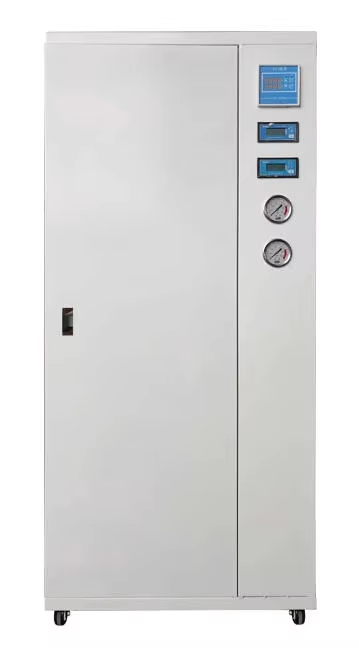 Analysis of the Structure and Working Principle of Ultrapure Water Equipment
 Tips for Using Home Water Purifier Filter Cartridges
 The Battle of Four Membranes: Microfiltration, Ultrafiltration, Nanofiltration, Reverse Osmosis—Which Reigns Supreme in Water Purification?
 Don't Pay for Stupidity! The Ultimate 2026 Water Purifier Guide: Selection, Pitfalls, and Maintenance All in One Article